
The second-hand market is booming, with a projected global value of $350 billion by 2027. On Vinted, not all categories perform equally. Sneakers and kids' clothing are top performers in 2026, with high sell-through rates and fast turnover. Seasonal timing and strategic pricing are key to maximizing profits.
Here’s what you need to know:
- Sneakers: Average €15.14 per listing. New Balance leads with a 61% sell-through rate.
- Kids' Clothing: Moves fastest, selling in just 3.8 days, with bundles increasing sales by 38%.
- High Street Brands: Zara and H&M dominate, selling within 3–10 days, but at lower resale values (20–40% of retail).
- Mid-Range Brands: Nike and Gymshark balance profitability (233–283% markup) and speed (4.2 days).
- Designer Items: High margins (50–70% of retail) but slower turnover (28.1 days).
To succeed, list items during peak demand, use detailed photos, and price competitively. For winter gear, list in September; for summer wear, focus on spring. Tools like VintiePlus can streamline sourcing and pricing decisions.
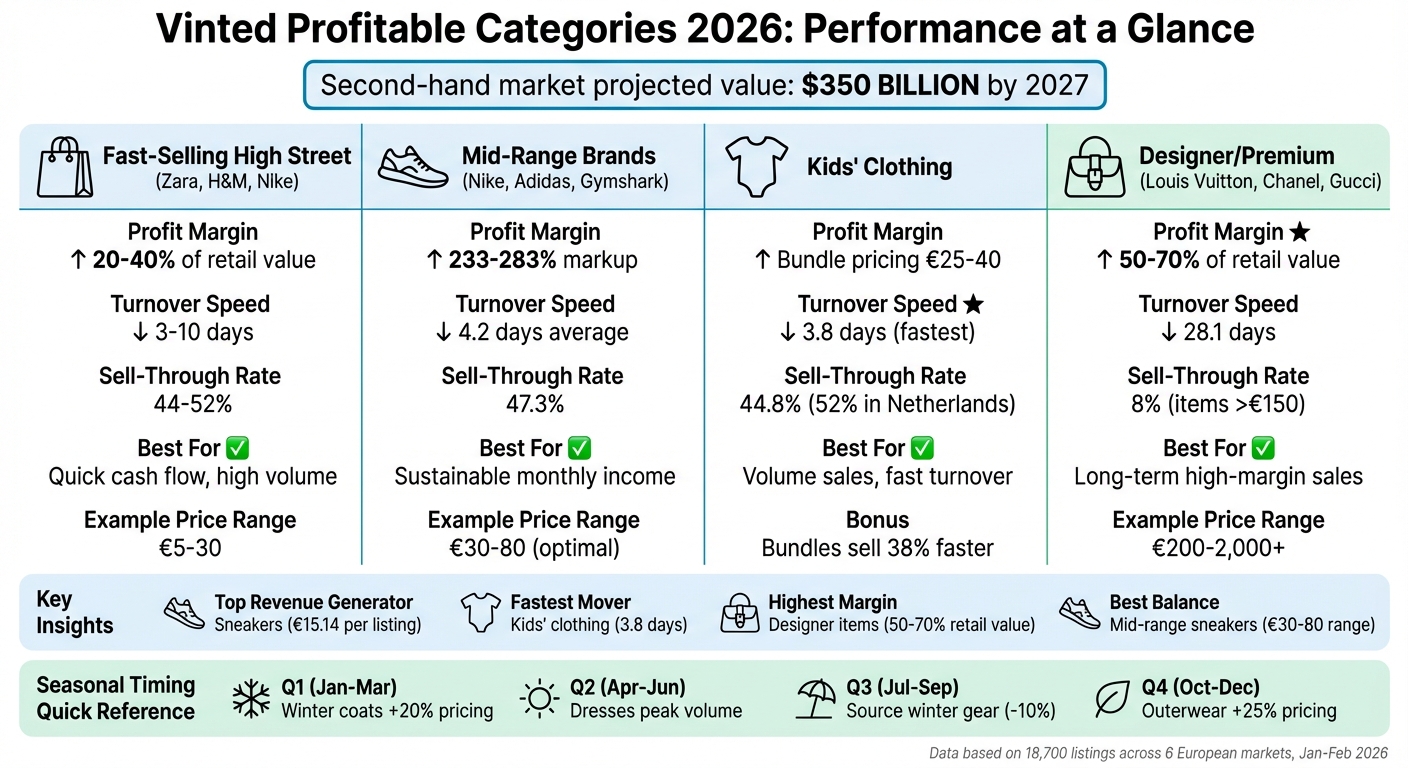
Vinted Category Performance Comparison: Profit Margins vs Turnover Speed 2026
The BEST Items To Resell On Vinted In 2026 (Beginner's Guide)
sbb-itb-d4aa959
1. Fast-Selling High Street Brands
In 2026, high street brands like Nike, Zara, and H&M are dominating Vinted, serving as key drivers of sales volume. These brands thrive on their established popularity, making them quick sellers. However, the competition is intense, creating a challenging "Red Ocean" market.
Profit Margins
When it comes to resale value, standard high street brands generally fetch 20–40% of their original retail price. Premium brands like COS and &Other Stories, however, hold onto 60–70% of their retail value. If you're sourcing inventory, "Grade A" vintage wholesale boxes can be a goldmine for brands like Nike and Adidas, with items costing €3–€8 each and offering a potential 3× markup. For individual resale, Zara pieces typically sell for €8–30, while H&M items go for €5–20.
Turnover Speed
Nike sneakers dominate the sneaker category, making up 38% of all listings and achieving a 52% sell-through rate. Meanwhile, New Balance has emerged as a surprise contender, with a higher 61% sell-through rate, despite only accounting for 8% of sneaker listings. Adidas follows closely with a 44% sell-through rate. Presentation also matters - items photographed in natural daylight move 35% faster, and listings with 8 or more photos sell twice as fast as those with fewer images.
Market Demand
Women's tops and blouses from high street brands are the most sought-after category on Vinted, representing 22% of all transactions. Zara leads the charge with over 15 million listings, followed by H&M at 12 million. To improve visibility, use trending keywords like "Y2K," "Gorpcore," and "Archival" in your listings. Plus-size clothing (sizes 44+) is another promising area with high search demand but lower competition.
Seasonal Performance
Timing is everything when it comes to maximising profits. Listing around 5 items daily keeps your inventory visible in Vinted's "new items" feed. For maximum engagement, aim to post on Sunday evenings between 20:00 and 22:00. Seasonal items like puffer and trench coats should be listed in late September, as sales for outerwear peak between October and February.
Next, we’ll dive into how mid-range brands stack up in terms of speed and profitability.
2. Mid-Range Brands
Mid-range brands build on the success of fast-selling high street labels by offering a balanced mix of profitability and quick turnover. These brands, including Reiss, Whistles, Boden, AllSaints, Lululemon, and Gymshark, occupy a sweet spot on Vinted in 2026. They provide better profit margins than high street names while maintaining faster turnover rates than luxury items - making them a go-to choice for resellers focused on steady revenue rather than high margins per piece.
Profit Margins
For resellers, wholesale sourcing remains a reliable way to secure profitable mid-range inventory. Take Nike vintage hoodies, for instance: bought for around €28,00, they can resell for €50,00 to €65,00, offering returns of 79% to 132%. Similarly, Ralph Lauren polos, acquired at approximately €20,00, typically sell for €35,00 to €45,00, yielding returns between 76% and 126%. Activewear brands like Lululemon and Gymshark perform particularly well when sold as matching sets, which allows for higher pricing.
Unlike high street brands that rely on volume, mid-range items balance strong ROI with faster reinvestment cycles. Even small pricing strategies, like listing an item at €19,00 instead of €20,00, can boost sales speed by 15%. Implementing proven Vinted selling tips further optimizes these results. This combination of attractive margins and quicker turnover makes mid-range brands a strong choice for resellers looking to scale efficiently.
Turnover Speed
Mid-range brands excel in turnover speed. For example, sneakers average a 4.2-day turnover with a 47.3% sell-through rate. Kids' clothing, particularly from brands like Boden and Joules, moves even faster - selling in about 3.8 days. The Netherlands leads European markets with a 52% sell-through rate for this category.
Bundling items, such as offering five pieces together, can further accelerate sales, increasing turnover speed by 38% in the kids' clothing segment. This rapid movement ensures that cash isn’t tied up for long, enabling frequent reinvestment and sustained growth.
Market Demand
Consumer demand for mid-range items remains strong, particularly in categories like denim and activewear. Dutch buyers show a clear preference for denim and cycling-friendly clothing, with brands such as G-Star, Scotch & Soda, and Denham standing out. Footwear also performs exceptionally well; sneakers generate an average of €15,14 per listing over 30 days - 3.2× more revenue than slower-moving categories like electronics accessories.
Activewear brands like Gymshark and Sweaty Betty benefit from a growing interest in sustainability. Around 70% of Gen Z buyers now prioritise second-hand mid-range items over new fast fashion. Additionally, Y2K and '90s nostalgia trends continue to fuel demand for vintage pieces from brands like Nike, Adidas, and Levi's.
Seasonal Performance
Timing is crucial for maximising profits with mid-range brands. For example, jackets and coats see a 38.1% sell-through rate from October to February, but this drops to about 15% during summer. Winter items can command prices that are 15–25% higher during the peak months of November through March.
Consistency also plays a role. Uploading 2–3 items daily between 18:00 and 21:00 can improve algorithm visibility. For footwear, focusing on sneaker sizes EU 40–45 is a smart move, as these sizes sell 2.3× faster than less common sizes.
Next, let’s dive into how designer and premium brands stack up in terms of profitability and market influence.
3. Designer and Premium Brands
Designer and premium brands occupy a high-margin, low-turnover niche on Vinted. Brands like COS, Sandro, Maje, Louis Vuitton, Chanel, and Gucci hold their value far better than fast fashion. While high street labels typically retain only 20–40% of their retail price, these premium names manage to keep 50–70%. This makes them appealing to resellers who are patient enough to wait for the right buyer and can afford to invest in inventory.
Profit Margins
Premium brands consistently offer the best profit margins on Vinted. In 2026, the average return on investment (ROI) for vintage and premium branded items ranges from 80% to 150%. A general pricing strategy involves multiplying the purchase price by 2.5, leaving room for negotiation.
Cross-border arbitrage has become a key strategy for resellers. For example, sourcing items in Poland or Lithuania can be 30–60% cheaper than selling them in high-demand markets like France. Designer handbags on Vinted typically range from €200,00 to over €2.000,00, while brands like Sandro and Maje usually sell for €40,00–€150,00. To ensure buyer confidence, always include detailed photos of labels, stitching, and date codes for authentication.
These impressive margins naturally lead to a slower, more calculated resale process.
Turnover Speed
Although profit margins are high, turnover speed for designer items is slower. Items priced above €150,00 sell at an 8% rate, taking an average of 28,1 days to find a buyer. That said, certain brands defy this trend. Louis Vuitton, for instance, has the fastest turnover among luxury brands across Europe.
"Louis Vuitton, Chanel, and Gucci are the top-selling luxury brands on Vinted, while Louis Vuitton explicitly stands out for its speed in sales." - Cécile Wickmann, Senior Director Luxury, Vinted
Premium sneakers are another standout category. New Balance boasts a 61% sell-through rate - the highest for any brand in 2026 - while Nike achieves a respectable 52%. Bags and accessories average 8,1 days to sell, with a 33,2% sell-through rate. For a quicker turnover in the premium sneaker market, aim to price items between €30,00 and €80,00.
Market Demand
Market demand plays a crucial role in the success of premium brands. France leads as the largest buyer of luxury goods on Vinted, with a 39% sell-through rate for designer bags. The premium vintage market is growing at an annual rate of 40% as of 2026, driven primarily by Gen Z buyers. Around 70% of this demographic now favours investing in second-hand luxury items over disposable fashion.
Understanding which categories and items are in demand is vital.
"Due to scarcity, demand is increasingly outstripping supply and some items - especially classic handbags - are proving to be real winners when it comes to resale." - Björn Holzhauer, Senior Brand Expert at Vinted
Shifting trends are also shaping demand. While Y2K nostalgia remains popular, interest is expanding to pieces from the 80s and even the 50s. Items like vintage tweed blazers from Ralph Lauren or Etro, as well as feminine pin-up styles, are gaining traction. High-demand items in 2026 include the Celine Triomphe Bag and Lady Dior Bag, particularly in Eastern European markets like Poland. To support this market, Vinted’s Item Verification Service (IVS) offers physical authentication in cities like London and Hamburg, catering to brands such as Jacquemus, Celine, and Bottega Veneta.
Seasonal Performance
Timing is everything when it comes to selling designer items. Premium outerwear brands like Moncler and Canada Goose see 80% of their yearly sales in Q4, with peak demand running from September to February. During this period, prices can climb 15–25% higher, especially from November to March. However, sell-through rates for high-end jackets drop to around 15% in the summer months.
To capitalise on these trends, list luxury outerwear starting in August or September to catch the pricing surge in November and December. Designer bags and accessories also see increased demand in Q4, fuelled by holiday shopping. For year-round consistency, focus on classic handbags and premium sneakers, which enjoy steady demand regardless of the season.
4. Product Categories Beyond Brand Names
In 2026, many of the most profitable items on Vinted owe their success to their category rather than their brand name. A study of 18,700 listings across six European markets, conducted between 15 January and 14 February 2026, highlighted that product categories often hold more sway than brand recognition when it comes to sales performance.
This trend showcases how the type of product alone can influence revenue, speed of sale, and demand. Below, we dive into profit margins, turnover speed, demand patterns, and seasonal performance for these categories.
Profit Margins
Certain categories stand out for their ability to generate revenue quickly. Sneakers lead the pack, earning an average of €15.14 per listing. Items priced between €30.00 and €80.00 perform even better, bringing in €17.00 to €21.00 per sale. Jackets and coats follow with €10.67 per listing, while bags and accessories achieve €7.97.
Kids clothing, though priced lower at an average of €8.00, benefits from high volume. Bundles of five items sell for €25.00 to €40.00 and move 38% faster than individual pieces.
"The highest-priced categories aren't the fastest sellers. And the fastest-selling category generates 3.2x more revenue per month than the slowest." - DataKaz
Vintage band t-shirts from the 1980s and '90s also perform exceptionally well, selling for €20.00–€80.00 and moving three to five times faster than standard tops. Meanwhile, home and living items average €14.00 per sale.
Turnover Speed
When it comes to speed, kids clothing dominates, selling in just 3.8 days on average with a 44.8% sell-through rate. The Netherlands leads this category with an impressive 52% sell-through rate. Sneakers follow closely, selling in 4.2 days - a significant improvement from the 12-day average in 2025. Jackets and coats take 6.7 days during peak seasons, while dresses average 7.3 days. Home and living items require 11.3 days to sell, and electronics accessories lag behind at 14.6 days.
For plus-size clothing (sizes 18–28), the combination of high demand and limited supply ensures faster sales no matter the season.
Market Demand
Demand patterns reveal distinct regional preferences across Europe. The Netherlands excels in kids clothing, with a 52% sell-through rate, while France leads in sneakers at 54%, and Italy takes the top spot for dresses with a 41% sell-through rate.
Categories like activewear and loungewear maintain steady demand year-round, fueled by the ongoing "comfort is king" trend in 2026. Similarly, maternity and nursing wear sells quickly due to its short-term use, making second-hand options especially appealing.
Plus-size clothing continues to face a supply–demand gap, driving faster sales for sizes 18–28. With Gen Z leading the charge, 70% of their purchases in 2026 are second-hand, contributing to the global second-hand market's projected value of $350 billion by 2027.
Seasonal Performance
The timing of listings plays a crucial role in maximizing sales for certain categories. Jackets and coats see 80% of their yearly sales during Q4, with sell-through rates peaking at 38.1% between October and February. During summer, this drops significantly to around 15%. Listing winter outerwear in late September captures the early wave of demand.
Dresses, on the other hand, perform best when listed in late spring, aligning with summer wardrobe planning. Meanwhile, categories like sneakers, activewear, and kids basics enjoy consistent demand throughout the year, making them reliable options for steady sales.
5. Seasonal Timing Opportunities
Seasonal timing plays a key role in fine-tuning reselling strategies. By aligning your listings with peak demand periods, you can significantly improve profits and turnover rates.
Profit Margins
Winter items often command higher prices. For example, hoodies and sweaters see a 20% price hike in January and February, while jackets can fetch 25% more in November and December. A jacket bought for €20,00 in August could sell for €25,00 during the winter rush. On the flip side, summer items like t-shirts and shorts typically drop by 10% in price during July and August, making these months ideal for sourcing inventory.
The "buy low, sell high" strategy is particularly effective here. Items like vintage windbreakers and Ralph Lauren polos have delivered returns between 76% and 134% in previous years. These seasonal price fluctuations also impact how quickly items sell, making timing even more essential.
Turnover Speed
Different categories perform better at specific times of the year. Jackets and coats, for example, enjoy a 38,1% sell-through rate during winter but drop to around 15% in summer. Dresses, on the other hand, see a sharp increase in sales during Q2 and Q3 (April through September), with sales volumes spiking by approximately 60%. Sneakers, which sell consistently throughout the year, average just 4,2 days to sell but perform exceptionally well during back-to-school and holiday shopping periods. These variations reflect how consumer demand shifts with the seasons.
Market Demand
Consumer preferences also change throughout the year. In January, gym gear, trainers, and activewear become top sellers as people focus on New Year’s fitness goals. Skiwear, including jackets, salopettes, and thermal layers, also peaks during this time. By March, as spring approaches, summer jumpsuits and maxi dresses start gaining popularity. In the Netherlands, demand for cycling-friendly clothing and denim brands like G-Star and Denham remains strong year-round. Resellers often source these high-demand items using a Vinted UK reshipper to access exclusive inventory. Meanwhile, kids' clothing consistently leads with a 52% sell-through rate, driven by the constant need for replacements as children outgrow their wardrobes.
Seasonal Performance
Timing your listings is crucial to capitalizing on these trends. For instance, uploading winter coats in late September can help you capture early demand before the market becomes oversaturated.
Here’s a quick overview of seasonal opportunities by quarter:
| Period | Peak Categories | Pricing Trend | Strategic Action |
|---|---|---|---|
| Q1 (Jan–Mar) | Winter Coats, Hoodies, Sweaters | +20% | Clear winter stock; list spring items in February |
| Q2 (Apr–Jun) | Dresses, Sandals, Summer Tops | Normal | Highest sales volume of the year |
| Q3 (Jul–Sep) | Back-to-School, Fall Jackets | –10% | Source winter gear at lowest prices |
| Q4 (Oct–Dec) | Outerwear, Boots, Party Dresses | +25% | Peak profit margins for coats and holiday wear |
Beyond seasonal timing, the when of your uploads also matters. Posting items during the "golden window" of 19:00 to 21:00 on weekdays can boost sales by up to 450%. This is when the Vinted algorithm is most likely to reward consistent activity. Uploading 2 to 3 items daily during these hours can help maximize your visibility.
Pros and Cons
Here’s a breakdown of the trade-offs for reselling different types of brands. Your choice will depend on whether you're aiming for quick cash flow, steady margins, or long-term gains.
Fast-selling high street brands like Zara and H&M are all about speed. Items sell quickly - typically within 3 to 10 days - but at a lower resale value, usually just 20% to 40% of their original retail price. This category works best if you're focusing on volume and fast turnover rather than high profits per item.
Mid-range brands, such as Nike and Adidas sneakers, strike a great balance. They offer impressive profit margins (233–283% markup) and quick turnover, with sales averaging just 4.2 days. These brands are ideal for generating steady monthly income, especially in the €30,00 to €80,00 price range, which optimizes both speed and profitability.
Designer and premium brands deliver the biggest profits per item, retaining 50% to 70% of their original retail value. However, they come with challenges: items priced above €150,00 have a low sell-through rate of just 8% and take an average of 28.1 days to sell. This means your money is tied up for longer periods, and you'll need to invest in authentication to gain buyer trust, adding extra steps to the process.
Here’s a quick summary of the trade-offs:
| Category | Profit Margin | Turnover Speed | Market Demand | Best For |
|---|---|---|---|---|
| Fast-Selling High Street | Low (20–40% of retail) | Very High (3–10 days) | Huge; volume-driven | Quick cash flow |
| Mid-Range Brands | High (233–283% markup) | High (4–12 days) | Consistent; brand-loyal | Sustainable monthly income |
| Designer/Premium | Highest (per-item profit) | Low (28+ days) | Niche; investment-heavy | Long-term, high-margin sales |
Each category has its strengths and challenges, so aligning your strategy with your goals is key. Whether you’re after fast cash, steady profits, or premium returns, understanding these dynamics will help you make smarter reselling decisions.
Conclusion
In 2026, Vinted rewards sellers who strike a balance between quick sales and healthy profit margins. Sneakers continue to dominate as the most liquid category, with an impressive 47.3% sell-through rate and a revenue velocity of €15.14 per listing. Kids' clothing moves even faster, selling in just 3.8 days, making it perfect for volume-driven strategies. On the other hand, premium vintage and designer items may take longer to sell but often deliver higher profits per item.
These metrics can help shape your approach: focus on high-street brands and kids' clothing bundles if you’re aiming for fast cash flow. For a steady, balanced income, mid-range sneakers priced between €30.00 and €80.00 are a strong choice. If your goal is long-term growth, investing in premium vintage or designer pieces could pay off with higher returns over time.
Timing plays a key role, too. Listing new items daily helps maintain visibility during peak activity. For seasonal items like winter coats, sourcing in August and September and listing them 4–6 weeks ahead of October’s demand peak can significantly improve your sales.
With the second-hand market thriving and Vinted’s 85 million users active in the Benelux region, data-driven strategies are more important than ever. Manually tracking thousands of listings is no longer practical, which is where tools like VintiePlus come in. Its automated scanning, instant buying features, advanced analytics, and custom filters turn marketplace data into actionable insights, taking the guesswork out of pricing and sourcing decisions.
Success in 2026 hinges on making informed choices and staying consistent. By understanding your category's performance metrics and streamlining your processes, you’ll be well-positioned to boost profitability.