
Buy from UK regions to increase profits! 🇬🇧 Reship Now
Company Logo

VintiePlus

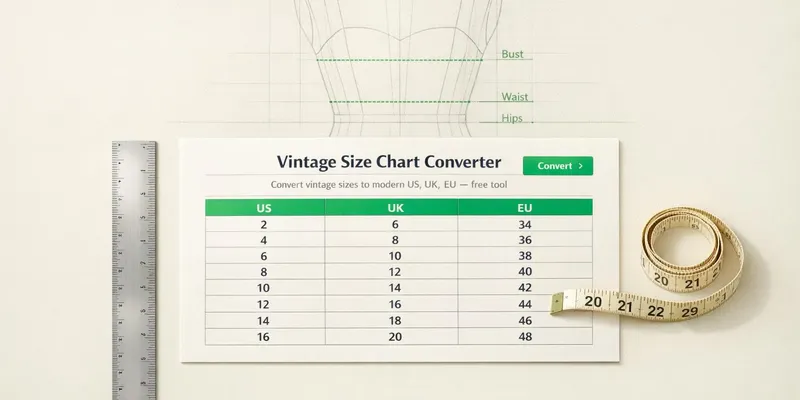
Vintage Size Chart Converter

Vintage Size Chart Converter

Published on: January 31, 2026

Discover the Past with Our Vintage Size Chart Converter

Shopping for vintage clothing is like stepping into a time machine—full of charm, unique styles, and, unfortunately, confusing size labels. If you’ve ever stumbled upon a stunning 1960s dress or a sharp 1950s jacket only to scratch your head at the sizing, you’re not alone. That’s where a reliable tool for converting retro measurements to today’s standards comes in handy. Whether you’re a seasoned collector or a casual thrifter, figuring out the right fit shouldn’t stand between you and your dream find.

Why Vintage Sizing Feels Like a Mystery

Back in the day, clothing sizes weren’t as uniform as they are now. Different decades, regions, and even individual designers had their own ideas of what a ‘size 12’ meant. Add to that the evolution of body standards over time, and you’ve got a real challenge. A tool that bridges old-school labels to modern equivalents can save hours of research and countless returns. For anyone passionate about sustainable fashion or hunting down timeless pieces, having a quick way to decode these numbers is a game-changer. Next time you’re eyeing a piece from a bygone era, just plug in the details and shop with confidence.

Never Miss a Deal Again

Get instant alerts when new items match your criteria. Be the first to grab the best vintage finds on Vinted.

Lightning-fast alerts
Custom filters
Instant notifications
View Pricing

Frequently Asked Questions

We’ve built this tool using widely accepted vintage sizing charts and historical data, cross-referenced with modern standards. That said, vintage sizing can vary wildly depending on the era, brand, or even the country of origin. We recommend using our results as a starting point and always double-checking with actual measurements when possible. If you’re buying a piece from the 1950s, for instance, a ‘size 10’ might differ from a 1970s ‘size 10.’ Our tool gives you the closest match, but fabric stretch and cut matter too!

Great question! Vintage sizing evolved over decades as fashion standards and body ideals shifted. In the early 20th century, sizes were often based on smaller frames or specific garment measurements rather than standardized charts. Plus, different countries had their own systems—think US versus UK tailoring. Modern sizing tries to streamline this, but it’s still not perfect. That’s why our converter accounts for region and gender to get you as close as possible to today’s fit.

Absolutely, we’ve got you covered! Our tool includes separate mappings for men’s and women’s vintage sizes since they often follow different scales, especially in older garments. Just pick the gender from the dropdown along with your region, and we’ll handle the rest. Whether it’s a 1940s men’s suit or a 1960s women’s dress, you’ll get a modern equivalent tailored to those distinctions. If you’re unsure about a unisex piece, try both options to compare.