

Want to succeed in vintage reselling? Avoid these five common mistakes:
- Incorrect Pricing: Price too low, and you lose profit. Price too high, and items won’t sell. Use data from completed sales (not active listings) to set accurate prices. Tools like VintiePlus can help track market trends and automate pricing adjustments.
- Weak Listings: Poor photos and vague descriptions (e.g., “Black jeans”) hurt sales. Use clear, well-lit images and detailed descriptions, including measurements and flaws, or follow these Vinted selling tips to boost your performance. Regularly repost listings to maintain visibility.
- Slow Inventory Sourcing: Manually searching for items wastes time. Automation tools like VintiePlus can monitor platforms 24/7, alerting you to underpriced items or even auto-buying them. Speed is key to securing the best deals.
- Lack of Focus: Selling random items confuses buyers. Specialise in a niche, like 90s streetwear or outdoor jackets, to stand out. Focused shops attract repeat customers and allow for better pricing strategies.
- Ignoring Authenticity and Data: Counterfeit items damage your reputation. Always verify labels, stitching, and materials. Track performance metrics to identify trends, adjust prices, and improve profitability.
Quick Comparison Table
| Mistake | Problem | Solution |
|---|---|---|
| Incorrect Pricing | Items overpriced or underpriced | Use sales data and analytics tools like VintiePlus |
| Weak Listings | Poor photos and vague descriptions | Create clear, detailed listings with quality images |
| Slow Inventory Sourcing | Missed deals due to manual searches | Automate sourcing with tools like VintiePlus |
| Lack of Focus | Unclear shop identity | Choose a niche and stick to trending, in-demand categories |
| Ignoring Authenticity | Risk of selling counterfeit items | Verify labels, materials, and stitching; document flaws |
Avoid these pitfalls by combining smart pricing, automation, and focused selling strategies. Tools like VintiePlus can save time and help you stay competitive in a fast-moving market.
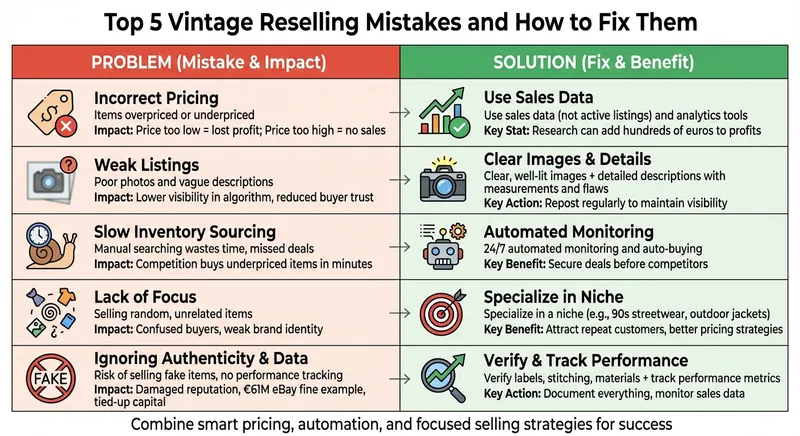
5 Common Vintage Reselling Mistakes and Solutions Comparison Chart
5 Things to STOP Doing in Your Vintage Resale Business
sbb-itb-d4aa959
1. Pricing Items Incorrectly
Getting pricing wrong can be a costly mistake for vintage resellers. Price too low, and you leave money on the table. Price too high, and your inventory sits unsold, tying up cash you could use for fresh stock.
Mispricing often stems from limited market knowledge. Many resellers rely on guesswork or automated low-ball suggestions, basing prices on perceived value rather than actual buyer behavior. For example, while a basic Nike hoodie might sell for €20–€35, a rare 90s edition could fetch €50–€70. Without proper research, it’s easy to miss the mark.
"Too expensive = it won't sell. Too cheap = you lose money." – United Vintage
The impact goes beyond immediate profits. Platforms like Vinted use algorithms that favor well-priced items and fresh listings. Overpriced items can quickly lose visibility, sinking to the bottom of search results. On the flip side, underpriced treasures often get snapped up before you realize their true worth. With 60% of 18–35-year-olds now choosing second-hand items - and searches for luxury brands like Gucci and Louis Vuitton rising by 45% and 24%, respectively - getting pricing right is more important than ever. Accurate pricing not only maximizes profits but also boosts your listings’ visibility.
This highlights the need for a data-driven pricing approach. The foundation of effective pricing lies in thorough market research and smart analytics.
1.1 Research Market Prices and Demand
To price competitively, start by understanding actual market demand. The best data comes from completed sales, not active listings. Use filters like "Sold" on platforms such as Vinted and eBay to see what buyers have actually paid. For instance, a €60 asking price might only result in a €42 sale, giving you a clearer picture of the real market value.
Condition plays a big role in pricing. Items that are new with tags can sell for 60–80% of their original value, while those in very good condition might fetch 40–60%, and those in good condition only 20–40%. Timing is another factor: list items about two months before peak seasonal demand. A Levi’s 501 in excellent condition might sell for €80, but the same jeans with visible wear may only bring in €30.
Seasonal trends also matter. North Face puffers are most popular in January, while floral dresses see demand spike in April. Tools like Google Trends can help you monitor search trends for specific items. For example, a surge in "Ugg ultra mini" searches might justify a higher price.
Don’t forget buyer fees. Buyers often pay 3–8% in protection fees plus postage. A €5 item could cost the buyer over €8 in total, so keep your pricing competitive while factoring in these additional costs. Always think about the full transaction from the buyer’s perspective.
1.2 Set Prices Using Analytics Data
Once you’ve done your research, use analytics to refine your pricing strategy. Start with the 3× rule: multiply your acquisition cost (including cleaning, repairs, and shipping) by three for standard items, or by four to five for rare pieces. This ensures you maintain healthy margins after accounting for platform fees and other expenses.
Psychological pricing can also make a difference - list an item at €24,95 instead of €25 to make it feel like a better deal.
Platforms like VintiePlus provide real-time analytics, tracking sold prices across categories to help you find the sweet spot between quick sales and maximum profit. For example, hype sneakers priced between €70 and €200 typically sell within 5–15 days, while outdoor jackets priced between €60 and €150 may take 10–25 days to move.
Consider scheduling markdowns to keep inventory moving. Hold items at full price for 30 days, then reduce by 10–15% after 60 days, and drop by 20–25% after 90 days. Tools like VintiePlus can track performance and let you know when it’s time to adjust prices, taking the guesswork out of the process.
2. Creating Weak Product Listings
Once you’ve nailed down the right price, the next hurdle is ensuring your listings clearly communicate value to potential buyers.
A weak listing can instantly push buyers away. On platforms like Vinted, your photos and descriptions are your only tools to showcase value. The listing title often doesn’t even appear in the main feed. If your first photo is just a close-up of a detail instead of the full item, or your description says something vague like “Zara T-shirt” instead of “Zara high-waisted black slim jeans – EU 38,” you risk being overlooked by both buyers and Vinted’s algorithm.
The numbers back this up. Vinted’s user base skyrocketed from 30 million in 2019 to 65 million in 2022. Weak listings aren’t just ignored - they actively hurt your visibility. The algorithm favours sellers who upload detailed, recent listings. Generic titles disrupt keyword searches, making your item rank lower. Incomplete descriptions also erode trust and increase the chances of refund claims for “Significantly Not As Described” (SNAD) items.
"A generic sweater with no context? It languishes in search oblivion." – VintyLook
To avoid this, think of each listing as a mini sales pitch. High-quality photos, specific keywords, and honest descriptions not only build trust but also help the algorithm match your items with the right buyers. Even the most affordable items can sit unsold if these basics are ignored.
2.1 Write Clear Listings with Quality Photos
Start with your photos - they’re the first thing buyers notice. Use natural light and avoid backlighting to prevent silhouettes. A plain wall or a light-coloured sheet works well as a backdrop to keep the focus on your item. Your first image should show the entire item clearly, while close-ups of details like labels, stitching, or flaws can come later. Make sure clothes are clean and ironed - wrinkled or dirty items can make you seem unreliable.
Include precise measurements in your description, such as waist, inseam, bust, and rise in centimetres. This minimizes questions about fit and reduces the likelihood of returns. Use detailed, descriptive keywords - mention the brand, style, colour, material, and even local terms like “vintage kleding” to improve search rankings. Keep in mind that Google displays page titles up to 80 characters, with 40–80 being the sweet spot for visibility.
Transparency is key. Document any flaws with close-up photos, whether it’s a stain, missing button, or signs of wear. This builds trust and reduces SNAD risks. Buyers already pay 3–8% in protection fees on top of the item price, so they expect full honesty. One seller, unable to model a Moncler jacket, used an AI try-on photo instead of a flat-lay image. The listing received 23 favourites in 48 hours and sold quickly.
2.2 Increase Visibility with Reposting
Even the best listings lose visibility over time. Vinted’s algorithm prioritises recent activity, so older items naturally drop in search results. Regularly reactivating or reposting your listings keeps them at the top of buyer feeds. Aim to post during peak activity hours - between 19:00 and 22:00 - when users are most active.
Tools like VintiePlus make this process easier with a one-click reposting feature. You can refresh multiple listings in seconds without starting from scratch. Custom filters allow you to target specific niches, like “90s streetwear” or “Levi’s 501,” ensuring your items reach buyers actively looking for those categories. Instead of uploading everything at once, try batching your listings into smaller groups each evening to appear as new.
Pay attention to which listings get views but no sales, and tweak the photos or descriptions to improve their appeal. VintiePlus analytics can help you spot trends and figure out what’s working. Combining strategic reposting with well-crafted listings ensures your inventory stays visible to the right buyers. This approach not only boosts buyer trust but also earns you favour with Vinted’s algorithm, giving you a competitive edge.
3. Sourcing Inventory Too Slowly
When it comes to snagging underpriced vintage items on Vinted, speed is everything. The competition is fierce because many sellers undervalue their listings. Take, for instance, a navy Joules quilted gilet that could sell for €9–€14; it was listed for just €3 and sold within minutes. Relying on manual searches simply can’t keep up with the pace of 24/7 automation, leaving your funds tied up in slow-moving inventory instead of high-demand, undervalued finds.
"Vinted can be its own supply source... However, this method requires you to be very reactive because competition is fierce for good deals. This is where bots become truly valuable." – Vinted-Bot.com
The key isn’t to work harder but to work smarter. Automation tools are game-changers, continuously monitoring listings for specific brands, prices, and categories. These tools send instant alerts or even handle purchases automatically, ensuring you lock in deals before competitors have a chance to react. Once your inventory is secured, the next hurdle is speeding up delivery.
3.1 Automate Finding and Buying Items
Automation tools like VintiePlus are designed to run nonstop, scanning for new listings in real time based on the filters you set. Whether you’re hunting for Levi’s, North Face, or vintage leather jackets, these tools ensure you’re notified the moment a matching item is listed. You can set parameters like maximum prices or niche categories, giving you a crucial advantage over those manually scrolling through listings.
The real edge comes with auto-buying. VintiePlus can instantly complete purchases as soon as items are listed, eliminating the delay caused by manual checkout. For high-demand items - whether it’s branded streetwear or luxury pieces like Gucci (searches up 45%) or Louis Vuitton (up 24%) - every second counts.
"Using a grow bot is the main way that you can stay competitive among millions of Vinted sellers without wasting a lot of time." – SellerAider
With VintiePlus, you can configure the bot to target specific items, such as "90s Nike tracksuits" or "vintage Burberry trench coats", within a set price range. This transforms sourcing from a time-consuming task into a streamlined, automated process, freeing you up to focus on other aspects of your business.
3.2 Speed Up Shipping with Reshipper Services
Securing inventory quickly is just one piece of the puzzle. To keep your operation running smoothly, you also need to streamline shipping. Sourcing from sellers across Europe often means dealing with cross-border trading delays, which can slow down your entire workflow. Waiting weeks for an item to arrive not only delays relisting but also ties up your capital.
That’s where reshipper services come in. Tools like VintiePlus offer solutions to consolidate purchases and ensure faster, more reliable delivery. This is especially useful when buying from countries with slower postal systems or when combining multiple purchases into a single shipment to save on costs.
Fast shipping doesn’t just benefit your workflow - it also boosts your reputation as a seller. Vinted’s algorithm and buyer trust favour sellers who ship quickly and reliably. Integrated shipping features allow you to generate labels, track packages, and update buyers without the hassle of manual data entry. Plus, VintiePlus’s batch label printing makes it easy to print multiple shipping labels at once, saving even more time.
The faster you receive your inventory, the sooner you can photograph, list, and sell it. A quick turnover cycle ensures your capital isn’t stuck in storage or transit, turning what could be a slow manual process into a competitive, scalable operation.
4. Targeting Too Many Product Categories
Offering a wide range of unrelated items can dilute your brand's identity. Imagine a buyer visiting your shop and spotting a pair of Levi's 501s displayed alongside a children's tutu. It’s confusing and leaves them wondering what your shop is all about. With Vinted's user base skyrocketing from 30 million in 2019 to 65 million in 2022, standing out in such a competitive marketplace requires a clear focus.
"The more specialised your brand, the easier you'll stand out from the competition." – Designify
Focusing on a specific niche not only strengthens your brand but can also boost your profits. Specialising in categories like 90s streetwear or outdoor jackets allows you to develop a keen eye for undervalued items that others might overlook. This expertise helps you price items more strategically, something generalist sellers often miss.
Niche selling also improves your shop’s visibility. Specific hashtags such as #90s, #streetwear, or #vintagedenim make it easier for potential buyers to discover your listings. Additionally, a cohesive inventory encourages shoppers to explore multiple items in your shop, fostering trust and repeat purchases.
4.1 Pick a Specific Niche to Sell
Finding the right niche begins with identifying market gaps - areas where demand outpaces supply. Take Jordan 4 sneakers, for example. A quick search on Vinted often shows only a few pairs available, yet they typically sell within 5–15 days at prices ranging from €70 to €200. Compare that to worn fast-fashion tees, which can linger for over 30 days and rarely sell for more than €5. The takeaway? Items that are both scarce and in demand move quickly and deliver better margins.
| Category | Avg. Turnover | Avg. Sale Price | My Verdict |
|---|---|---|---|
| Hype sneakers (Jordan, NB 550) | 5–15 days | €70–€200 | ⭐⭐⭐⭐ |
| Iconic denim (Levi's 501) | 7–20 days | €30–€80 | ⭐⭐⭐⭐ |
| Outdoor jackets (Patagonia, North Face) | 10–25 days | €60–€150 | ⭐⭐⭐ |
| Branded kidswear | 3–10 days | €10–€40 | ⭐⭐⭐ |
| Worn fast-fashion tees | 30 days + | < €5 | ⭐ |
This table highlights how narrowing your focus can align with market trends. For instance, 2025 is set to favour styles like Y2K, old money, and 90s streetwear. Heritage brands such as Levi's, Dr. Martens, Patagonia, and Sezane remain popular due to their emotional appeal and storytelling potential. A listing that mentions a Stone Island jacket was "bought at the flagship store in Milan" adds a layer of intrigue that generic descriptions lack.
"Brand + storytelling = gold." – VintyLook
To pinpoint your niche, use tools like Vinted’s "Sold" filter or eBay’s completed listings feature. Search for specific items - like "Levi's 501 mid wash" - to see how quickly they sell and at what price points. Platforms like Google Trends and TikTok (#vintedhaul) can also help you spot emerging trends before they peak. This combination of sales data and social insights ensures you’re targeting the right market.
Seasonality matters too. Listing North Face puffers in January or denim jackets in April aligns your inventory with seasonal demand, resulting in faster sales. Aim for a profit margin of at least double your purchase price, though rare niche items can yield margins as high as 4–10 times. The key is consistency - specialise in categories where you can reliably source quality inventory and build a reputation as the go-to seller for that style.
4.2 Use Custom Filters to Find Niche Items
After choosing your niche, the next challenge is sourcing inventory efficiently. Manually browsing listings to find a rare pair of Jordan 4s or a vintage Patagonia fleece is time-consuming. That’s where custom filters come in. Tools like VintiePlus let you set precise criteria - brand, size, colour, price range, and even specific keywords like "embroidered logo" or "90s" - to automatically scan for items that match your niche.
For example, if your focus is 90s outdoor gear, you can configure VintiePlus to monitor listings for brands like North Face and Patagonia within a €10–€50 price range. The moment a matching item is listed, you’ll get an alert, or the tool can even auto-buy it for you. This ensures you’re first to snag high-demand pieces, which is critical when items like branded kidswear can sell in just 3–10 days.
Custom filters also streamline your workflow by eliminating irrelevant listings, helping you stay focused on your strategy. VintiePlus goes further with features like batch label printing and reshipper services, which simplify handling multiple purchases and shipments.
These filters can also refine your listing strategy. By analysing which searches yield the most sold items, you can adjust your inventory to match buyer demand. For instance, if "Levi's 501 mid wash" consistently sells for €30–€80, you know it’s a reliable market. This data-driven approach transforms niche selling into a scalable and profitable system.
5. Ignoring Authentication and Performance Data
Selling counterfeit items can ruin your reputation in an instant. Back in 2008, a French court ordered eBay to pay €61 million to LVMH after it was revealed that 90% of Louis Vuitton handbags sold on the platform were fake. On platforms like Vinted, if a buyer proves an item is counterfeit under the "Significantly Not As Described" (SNAD) policy, you’ll not only have to issue a full refund but might also be on the hook for return shipping costs.
Ignoring sales data is another pitfall that can hurt your business. Without tracking key metrics - like how quickly items sell - you risk locking up your money in inventory that doesn’t move. Combining solid authentication practices with performance tracking strengthens your reselling strategy and helps you stay ahead.
5.1 Verify Product Authenticity
Authenticity is everything when it comes to reselling. Start by closely examining labels and typography. Older pieces may have unique tags, such as "Made in Britain", which became less common after production shifted to other regions. Care labels with washing instructions, for instance, only became standard in the 1970s. For luxury items like Louis Vuitton, check for details like even stitching and thread colors that match the brand's signature tone.
"Louis Vuitton has been one of the most, if not the most, counterfeited luxury brands to date." – Thalia Guarnieri
Pay attention to construction details, materials, and hardware. Authentic vintage items often feature metal zippers instead of plastic and showcase high-quality craftsmanship. Luxury pieces should have heavy brass hardware with clear, centered engravings, as counterfeits tend to use lighter, painted materials. Look for symmetrical monograms and fonts that align with brand standards; for example, Louis Vuitton’s “O” is always a perfect circle.
The fabric can also be a giveaway. Genuine vintage items often use period-appropriate materials like rayon, wool, or heavy cotton blends. If a piece claiming to be from the 1950s contains thin polyester, it’s likely fake, as polyester became common only in the 1960s. For high-value items, consider using AI-powered authentication tools, which boast accuracy rates of around 99.1%.
Document everything in your listings. Clear, close-up photos of brand tags, washing instructions, and any flaws not only protect you against SNAD claims but also build trust with buyers. If you’re unsure about an item’s authenticity, compare it to "Sold" listings on trusted platforms to find verified examples.
5.2 Track Performance to Improve Results
While authenticating products protects your reputation, tracking performance metrics ensures your business remains profitable.
Monitor sales data to identify trends and optimize your inventory. For example, hype sneakers often sell within 5–15 days for €70–€200, while branded kidswear can sell in just 3–10 days for €10–€40. If an item hasn’t sold within 30 days, consider reducing the price by 10–15% to attract buyers.
Calculate your net profit margins by subtracting acquisition costs, platform fees, packaging, and shipping from the sale price. Aiming for a selling price that’s 2 to 3 times your purchase cost is a good rule of thumb. Outdoor jackets from brands like Patagonia or The North Face typically sell for €60–€150, whereas fast-fashion T-shirts often stay under €5.
Engagement metrics like views and likes can also offer valuable insights. If an item gets a lot of attention but doesn’t sell, it might be overpriced. Tools like VintiePlus analytics can help you track these patterns, allowing you to adjust your pricing or sourcing strategy. Keep an eye on your SNAD rate as well; frequent disputes could indicate problems with your authentication or listing accuracy.
Use this data to refine your approach. If you notice that classic denim like Levi’s 501s consistently sells for €30–€80 within 7–20 days, you might want to focus more on sourcing similar items. By tracking performance, you can turn guesswork into a reliable system, ensuring your inventory works for you instead of sitting idle.
Conclusion
Tackling these five common mistakes - incorrect pricing, weak listings, slow sourcing, unfocused niches, and neglecting authentication - can turn your reselling efforts from a frustrating side hustle into a thriving business. Research indicates that spending just an hour on proper market research could add hundreds of euros to your profits.
That’s where VintiePlus steps in to simplify the process. By automating tasks like 24/7 listing monitoring, auto-buying underpriced items, and providing pricing analytics, it helps you secure inventory and tap into high-demand niches. The analytics tools take the guesswork out of pricing, helping you maintain competitive margins while aiming for that sweet spot of 2 to 2.5 times your purchase price. Features like reposting, performance tracking, and authentication tools ensure your listings stay visible and your reputation stays intact - essential in an industry where a single counterfeit claim can lead to costly refunds. This streamlined strategy sets the stage for consistent growth.
To support resellers at every stage, VintiePlus offers tailored plans:
- Basic Plan (€29,95/month): Perfect for beginners, offering essential automation and analytics to address common rookie mistakes.
- Pro Plan (€69,95/month): Ideal for growing resellers, featuring unlimited filters and batch label printing to tackle sourcing challenges.
- Ultimate Plan (€109,95/month): Designed for high-volume businesses, with advanced features like high-priority auto-buying to maximise profits.
Choose the plan that aligns with your goals and take your reselling journey to the next level.