
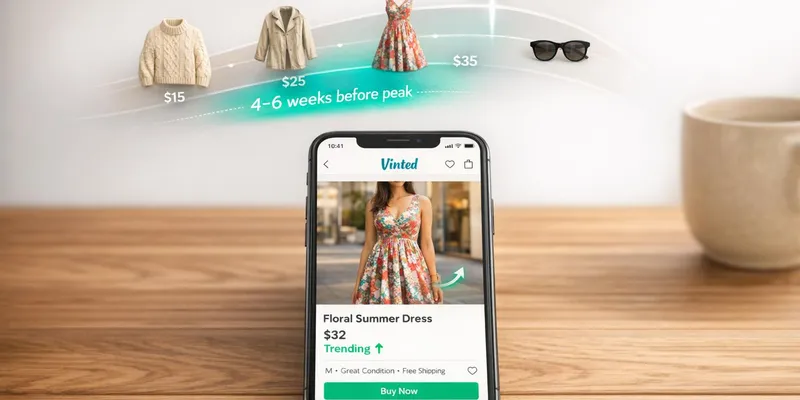
To maximize sales on Vinted, timing is everything. Seasonal trends heavily influence what sells and when. For example, jackets and coats see peak demand from September to November, while summer dresses and sandals dominate in spring and early summer. Listing items 4–6 weeks before their peak season gives you an edge over competitors.
Key strategies for spotting trends include:
- Analyze Sold Listings: Use Vinted’s filters to see what’s selling, not just what’s listed.
- Track Seasonal Categories: For instance, sneakers sell year-round, while winter boots have shorter demand windows.
- Leverage Automation Tools: Tools like VintiePlus can track trends and provide analytics to save time.
Timing your listings correctly and adjusting prices based on demand can significantly boost your profits. Sundays between 18:00–21:30 are prime times to post. For the Dutch market, focus on popular brands like G-Star and Scotch & Soda, and consider regional preferences like cycling-friendly clothing or high-end loafers.
How to Identify Seasonal Trends on Vinted
Using Vinted's Filters and Search Features
One of the most effective ways to uncover real trends is by filtering for sold items instead of active listings. Sold listings show what buyers are actually purchasing, giving you a clear picture of demand. For instance, if you notice a surge in sold puffer coats in September, it’s a good indicator of a seasonal shift.
Vinted’s search tools allow you to tweak URL parameters - like brand, size, and condition - to find niche opportunities. For example, filtering for premium brands in 'Good' condition can help you spot underpriced items, sometimes by as much as 23%. Sorting by newest_first also helps you stay updated on what’s being listed, offering early clues about emerging trends.
Since Vinted limits the number of results displayed, you’ll need to track trends manually or use automation tools to keep up. Once you identify potential trends, focus on the brands and categories that tend to perform best during specific seasons.
Tracking Popular Brands and Categories
Knowing how different categories perform can sharpen your seasonal reselling strategy. Women’s tops and jeans, for example, make up 40% of all Vinted sales, making them reliable options throughout the year. However, their popularity can fluctuate depending on the season. In the Netherlands, brands like G-Star and Scotch & Soda often show seasonal patterns.
Vintage band T-shirts from the 80s and 90s are another standout - they sell 3–5 times faster than regular tops. By regularly checking sold listings in your target categories, you can identify which brands and items are in demand during different times of the year.
Using Automation Tools for Analytics
If manually tracking trends feels overwhelming, automation tools can provide real-time insights and save time. While manual searches manage about 120 listings per hour, automation tools like VintiePlus can process up to 15,000 listings in the same timeframe. VintiePlus works around the clock to scan listings by brand, price, size, and condition. Its analytics dashboard tracks metrics like revenue, profit, ROI, and sold items, helping you pinpoint which categories perform best during specific seasons.
The tool’s date range selector is especially useful for comparing current sales with past data, allowing you to anticipate inventory needs before peak seasons hit. With automatic updates every 15 minutes, weekly ‘best items’ reports, and a community of over 6,000 users facilitating more than 500 purchases daily, VintiePlus offers a wealth of actionable data for identifying seasonal trends.
sbb-itb-d4aa959
How to Adjust Your Strategy for Seasonal Trends
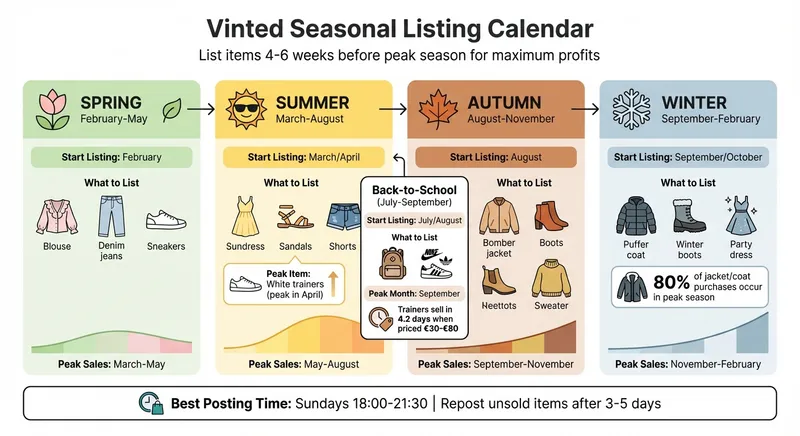
Vinted Seasonal Listing Calendar: When to List Items for Maximum Sales
Timing Your Listings for Maximum Impact
Getting the timing right can turn unsold stock into quick profits. For example, listing puffer coats in September instead of November gives you a head start on the busiest time for jacket and coat sales, which happens when 80% of such purchases occur. This early positioning helps you secure buyers before the market gets crowded.
On Vinted, Sundays see the most traffic, especially between 18:00 and 21:30, making it an ideal time to post your items. If your listing hasn’t sold within 3–5 days, delete and repost it to move it back to the top of search results.
| Season | What to List | When to Start Listing |
|---|---|---|
| Spring | Blouses, light denim, sneakers | February |
| Summer | Dresses, sandals, shorts | March/April |
| Autumn | Light jackets, boots, knitwear | August |
| Winter | Puffer coats, heavy boots, party wear | September/October |
Once your timing is sorted, focus on pricing to match seasonal demand.
Adjusting Prices for Seasonal Trends
Seasonal demand offers opportunities for flexible pricing. During peak periods, you can often raise prices by 15–20% without slowing down sales. For instance, white trainers that might sell for €45 in winter could go for €55 in April when demand spikes. On the flip side, if search volume for a category drops by 20%, lowering prices by 5% can help keep sales flowing.
Using psychological pricing (e.g., €19 instead of €20) can boost sales by up to 15%. If an item hasn’t sold after 14 days, dropping the price by 5% can trigger automatic notifications to interested buyers, encouraging them to act. In the Netherlands, most items sell between €12 and €28, so pricing within this range can improve your chances. Premium brands like COS tend to retain 60–70% of their original value, while fast-fashion brands like Zara typically sell for 20–40% of their retail price.
These pricing strategies help you make the most of high-demand periods while keeping your inventory moving during quieter times. With your pricing set, it’s time to prepare your stock for the upcoming season.
Preparing Inventory Ahead of Seasonal Demand
Getting ahead of seasonal trends starts with sourcing inventory early. Tools like Google Trends can help you identify upcoming spikes in demand, giving you a competitive edge. Focus on everyday basics and winter essentials, which often see a surge after the holiday season. For example, between January and September 2024, Vinted saw a 64% increase in searches for mid-tier and luxury brands like Coach and Levi's Made & Crafted.
Instead of uploading all your items at once, spread your listings over several days to consistently hit peak traffic times. Preparing inventory early also allows you to use automation tools to schedule sourcing and listings, ensuring you’re ready when demand peaks. By staying ahead of the curve, you can maximize your sales potential during seasonal highs.
Seasonal Trends on Vinted in the Netherlands
Understanding regional preferences in the Netherlands can help you fine-tune your strategy by aligning with local tastes and seasonal patterns.
Winter: Coats, Knitwear, and Boots
During the colder months, Dutch buyers gravitate toward heavy-duty outerwear. Brands like Moncler, The North Face, and Patagonia are particularly popular, reflecting the growing appeal of the Gorpcore trend - functional, weather-resistant clothing that’s both stylish and practical.
Interestingly, high-end loafers see higher demand in the Netherlands compared to other European markets. Cecile Wickmann, Senior Director of Luxury at Vinted, highlights this difference:
"Notably, members in the Netherlands are searching for more high-end loafers, whereas the British show significantly more interest in black luxury items compared to their European counterparts".
Maison Margiela Tabi Ankle boots, a timeless piece since their introduction in 1988, remain a year-round favorite among Dutch shoppers.
To make the most of winter sales, resellers should stock up on coats, knitwear, and boots during the summer and list them between August and September. Premium items like the Moncler Maya jacket tend to fetch higher prices during peak demand, while vintage knitwear from brands like Etro and Ralph Lauren benefits from the ongoing interest in archival fashion.
Summer: Festival Wear and Light Fabrics
When summer arrives, Dutch buyers shift their focus to lighter materials and festival-ready outfits. White trainers, especially from Nike, hit their peak in April thanks to their versatility. Sustainable and modern brands like Ganni and Reformation are also gaining traction among trend-conscious shoppers.
Winter is a great time to source bikinis, as they cost 5.5% less during the off-season. To align with rising summer demand, consider listing dresses, sandals, and shorts starting in March or April.
Cycling-friendly clothing is another consistent favorite in the Netherlands, reflecting the country’s bike-centric lifestyle. Tailored shorts and breathable tops are particularly popular among buyers looking for practical yet stylish options.
Back-to-School: Bags and Sneakers
As summer winds down, the focus shifts to back-to-school essentials. This period sees a surge in demand for trainers, with September and April standing out as peak months. Popular brands like Nike and Adidas sell quickly - often within 4.2 days - when priced between €30 and €80. New Balance sneakers also perform well, boasting a 61% sell-through rate.
Designer bags, including the Louis Vuitton Neverfull MM and Chanel Cambon, are highly sought-after during this season. Louis Vuitton, in particular, is the fastest-selling luxury brand on Vinted . Levi's 501 jeans also remain a staple, with an average resale price of €23.
For maximum impact, list back-to-school items in July or August. Trainers in EU sizes 42–44 are especially lucrative, selling 2.3 times faster than less common sizes. Additionally, Dutch brands like G-Star, Scotch & Soda, and Denham consistently resonate with local buyers.
Conclusion
Identifying seasonal trends on Vinted goes beyond simply observing what sells - it’s about aligning your inventory decisions with predictable demand patterns. By timing your listings strategically, such as posting seasonal items a few months before they’re most sought after, you can stay ahead of the competition and boost your profits.
For instance, the data shows that hype sneakers sell within 5–15 days, branded kidswear moves in 3–10 days, and outdoor jackets take 10–25 days to turn over. These insights allow you to focus on items that not only sell quickly but also offer strong profit potential.
While manual tracking can be time-consuming and limited, tools like VintiePlus simplify the process. They provide real-time monitoring and weekly reports on the best items, helping you spot underpriced seasonal finds as soon as they hit the platform. Plus, its community-driven insights and reports highlight buying trends specific to the Dutch market.