
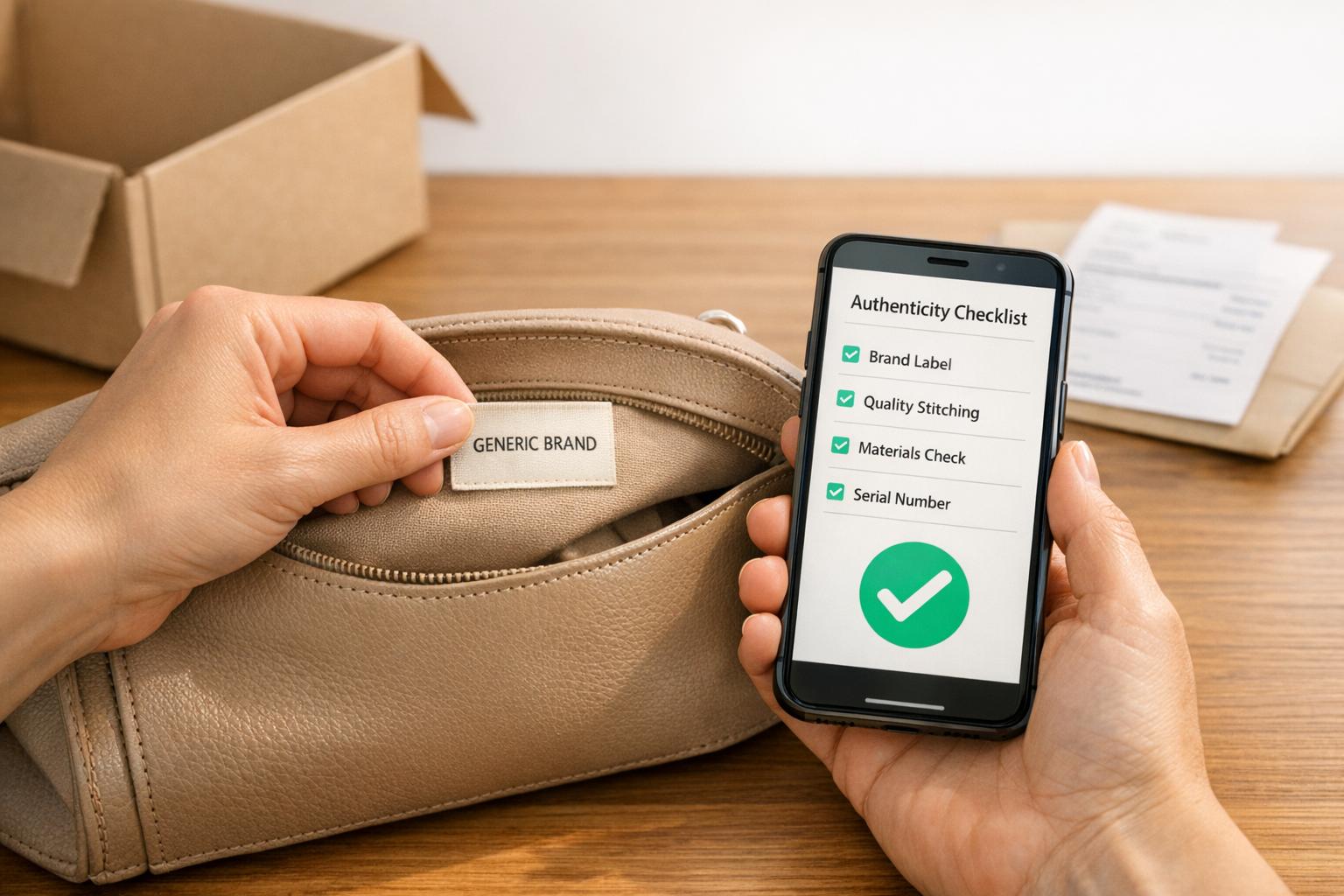
Selling on Vinted can be a great way to earn extra income, but it's important to avoid intellectual property (IP) violations, which can lead to account restrictions, financial losses, or even legal action. Vinted enforces strict rules to protect against counterfeit goods and IP disputes, and sellers must stay vigilant. Here's how you can protect your account and reputation:
- Inspect items thoroughly: Verify logos, tags, and other brand details or use Certilogo to spot fake items to ensure items are genuine.
- Check legal protections: Use trademark and design databases like TMview or EUIPO to ensure you're not infringing on trademarks or designs.
- Use original photos and accurate descriptions: Avoid stock images and vague details; provide clear, detailed photos and descriptions.
- Source responsibly: Buy from authorised distributors and keep records like invoices and receipts for all items.
- Review and update listings regularly: Address buyer reports quickly and ensure all active listings comply with Vinted's rules.
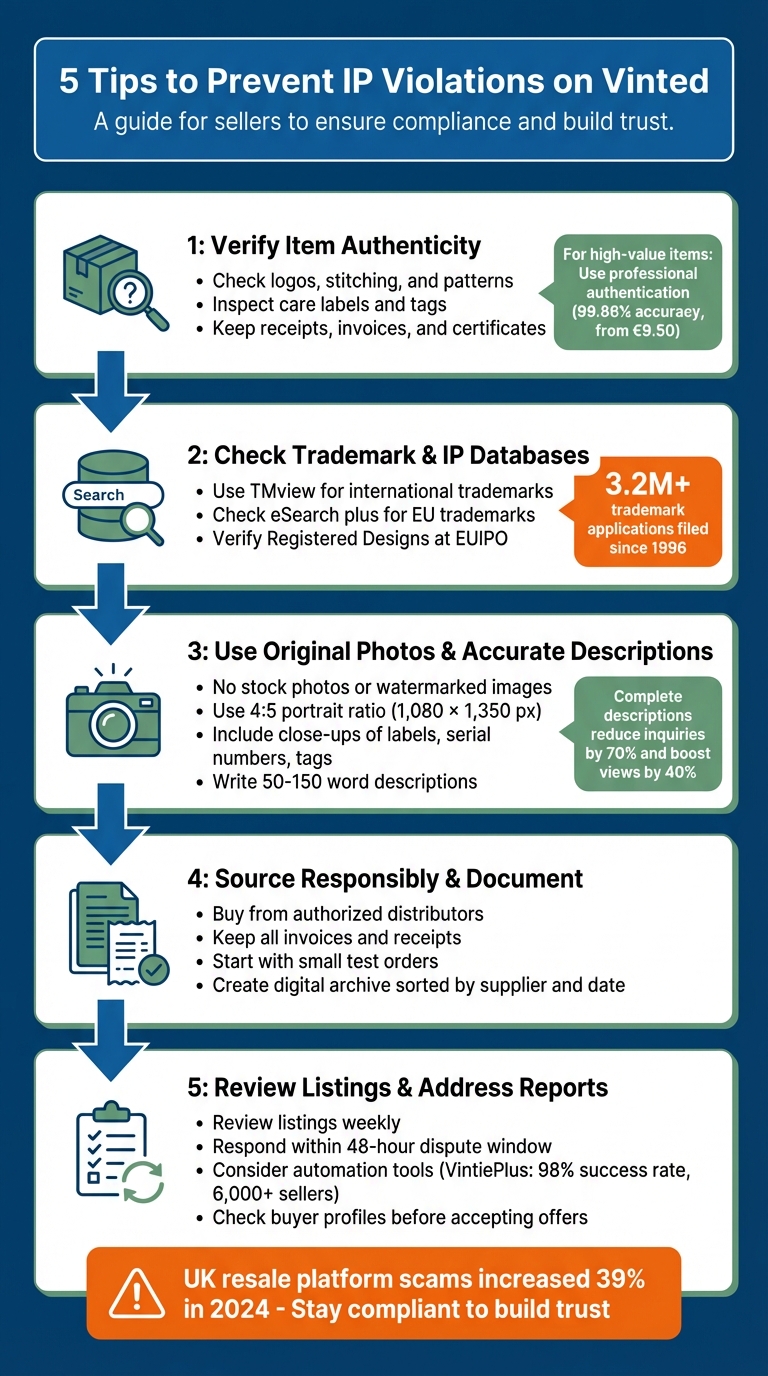
5-Step Process to Prevent IP Violations on Vinted
1. Verify Item Authenticity Before Listing
Before listing anything on Vinted, take the time to thoroughly inspect the item. Start with the basics: check the brand's logo for proper font and design, inspect the stitching to ensure it's neat and straight, and verify that any patterns are aligned correctly. Genuine items typically feature care labels and tags that meet the brand's quality standards.
Different types of items require specific attention. For instance:
- Bags and wallets: Capture clear photos of the serial number, heat-stamped logo, and any interior labels.
- Shoes: Focus on the insole, outsole, and sizing labels.
- Electronics: Include images of barcodes, date codes, and serial numbers.
- Vintage clothing: Look for union tags, RN (Registration Number) numbers, or country markers to help determine the garment's age.
"You're responsible for listing, selling, and sending only authentic items, in line with our Terms and Conditions and applicable laws." - Vinted Item Authenticity Policy
Keep all proof of authenticity on hand. This could include original receipts, invoices from authorised sellers, warranty cards, or certificates of authenticity. Vinted might request this documentation during the listing process or if a buyer disputes the item's authenticity. For high-value designer pieces, professional authentication services are a smart option. These services, some of which use AI technology with up to 99.86% accuracy, can authenticate items like sneakers for as little as €9.50 each.
Avoid using phrases such as "inspired by [brand]" or "not sure if authentic" in your descriptions. These can trigger intellectual property violation alerts. Instead, upload at least three clear photos showcasing brand tags, serial numbers, and stitching details. This not only reassures potential buyers but also protects your account from suspension if any disputes arise.
sbb-itb-d4aa959
2. Check Trademark and IP Databases
Once you've confirmed the physical authenticity of an item, the next step is to verify its legal status. This ensures you won't accidentally list products that infringe on registered trademarks or protected designs.
Start by using TMview (https://www.tmdn.org/tmview), a free tool that consolidates trademark data from various national and international IP offices, including those in the Netherlands. Simply enter the brand name to check its registration, current status, and the countries where it's protected. For trademarks specific to the European Union, use eSearch plus (https://euipo.europa.eu/eSearch). This platform focuses on EU trademarks and designs. To give you an idea of its scale, the European Union Intellectual Property Office (EUIPO) received a record 327,735 new applications for EU trademarks and designs in 2025. Since its launch in 1996, over 3.2 million applications have been filed as of March 2026. These databases are a great complement to your initial authenticity checks.
In addition to trademarks, it's essential to check for Registered Designs, which protect the visual appearance or unique shape of products. For instance, if you're selling an item with a distinctive pattern or silhouette - like a specific handbag design or a unique trainer shape - search the EUIPO design database to ensure you're not infringing on any protected designs. You can also use TMclass to identify the specific classes under which a brand is protected. For example, Class 25 covers clothing and footwear, while Class 18 includes leather goods. This helps clarify whether the trademark applies to the category of the item you're selling.
For items sold in the Netherlands, you should also consult the Benelux Office for Intellectual Property (BOIP) register, which oversees trademarks and designs for the Netherlands, Belgium, and Luxembourg. Be sure to keep detailed records of your searches as evidence of your due diligence. For those looking to scale their operations safely, automating your Vinted success can help manage these checks and listings more efficiently.
"Trade mark searches are an integral part of any trade mark protection strategy, but many companies do not routinely perform them or do not do so thoroughly enough." - IP Helpdesk
3. Write Accurate Descriptions and Take Original Photos
After ensuring your items pass authenticity checks and meet legal requirements, it's time to focus on presenting them accurately. This step is crucial for building trust with potential buyers. On Vinted, stock photos, advertisement images, or watermarked pictures are strictly banned - you must use your own original photos. Uploading screenshots from brand websites or promotional images is against the platform's rules and can result in automated flags for commercial activity.
Tips for Taking Great Photos
To make your listings stand out, follow these photography guidelines:
- Use the right dimensions: A 4:5 portrait ratio (1,080 × 1,350 px) works best for mobile displays.
- Leverage natural light: Position your item near a side window for even lighting.
- Keep it simple: Use a plain, neutral background to keep the focus on the item.
For added buyer confidence, include close-up shots of key details like brand labels, care tags, serial numbers, or authenticity certificates. This is especially important for luxury or frequently counterfeited brands. Highlight unique features like stitching patterns, date codes, or other physical markers. If there are any flaws, photograph them clearly to avoid disputes over "item not as described" claims.
Writing Descriptions That Sell
A strong description is just as important as great photos. Include all essential details:
- Brand name
- Item type
- Precise colour
- Size
- Material
- Exact measurements (in cm)
Complete descriptions reduce buyer inquiries by 70% and can boost your listing views by 40%. Aim for a description length of 50 to 150 words, or about 4 to 8 well-structured lines.
"The photo attracts, the description reassures." - VintyLook
Avoid vague terms like "good condition" without additional context. Instead, specify how often the item has been worn and be upfront about any defects. Transparency builds trust and helps you avoid refunds or negative reviews. Finally, sprinkle in relevant keywords like "vintage", "like new", or "limited edition" to improve search visibility, but make sure they accurately describe the item.
4. Source Items Responsibly and Keep Documentation
Always ensure your inventory comes from authorised distributors. This step is crucial for creating a clear paper trail, such as invoices, that trace an item's origin directly back to the brand. Such documentation not only reinforces your credibility but also serves as a safeguard against challenges to authenticity.
Beyond basic authenticity checks, take time to verify the reliability of your suppliers before committing to large orders. For vintage wholesalers or secondhand suppliers, start with small test orders. This allows you to assess the quality of their goods and identify any potential issues early. Dig into their background, read reviews from other resellers, and focus on building relationships with vendors who consistently provide genuine stock.
Organise all your receipts, invoices, and supplier agreements in a digital archive. Keep everything sorted by supplier and date, and include high-quality photos of brand-specific details like serial numbers, date codes, or care tags. As Lee from Vinkit points out:
"Purchase invoices to prove authenticity, high-definition photos of your items, sales history… Every element that demonstrates your good faith is crucial."
These records are essential. Without them, Vinted support may struggle to verify your claims in case of disputes.
For designer items purchased secondhand, consider using professional authentication services to obtain certificates of authenticity. This extra step can protect your account from potential restrictions.
"The receipt or an invoice of your item from an authorised distributor is essential in proving its authenticity as anyone can use it to trace its origin." – OneShop Team
5. Review Listings Regularly and Address Reports Quickly
Set aside time each week to go through your listings. Look for any descriptions or photos that might be unclear or could lead to violations. Staying proactive with your active listings can help you avoid small mistakes turning into major headaches, like account restrictions.
Vinted’s dispute process is quick - buyers have only 48 hours after delivery to raise a dispute and put a transaction on hold. This means you need to act fast if faced with counterfeit or intellectual property (IP)-related claims. Keep receipts, invoices, and timestamped photos handy to share through Vinted's official dispute thread. Always stick to the facts and present your case in a clear, step-by-step manner.
For extra protection, consider backing up your listings and using automation tools. For example, VintiePlus offers features like 24/7 account monitoring, a centralised dashboard for real-time compliance checks, one-click repost and cancel options, and custom filters. These tools simplify managing your listings. Starting at €29,95 per month, VintiePlus supports over 6,000 sellers, boasting a 98% success rate in preventing IP issues. Its dashboard lets you view details like brand, title, and condition in real time, so you can ensure compliance without juggling multiple tabs.
Before accepting offers, take a moment to review buyer profiles. Be cautious of ghost profiles with no photos or reviews, as well as buyers with a history of filing "item not as described" claims. These checks can help you avoid dealing with bad-faith claims that might harm your seller reputation.
Conclusion
Avoiding intellectual property violations on Vinted boils down to a few key practices: verifying the authenticity of items before listing, consulting trademark databases, using original photos paired with accurate descriptions, sourcing items responsibly with proper documentation, and routinely reviewing your listings. These steps not only protect you from potential account restrictions and legal trouble but also help preserve your reputation as a seller.
Always keep invoices, receipts, and certificates of authenticity readily available. Vinted may request these documents at any time to verify your items. For luxury goods, use clear, original photos that highlight logos, stitching, and authenticity codes. Selling counterfeit items not only breaches Vinted's Terms and Conditions but can also lead to serious legal consequences, including civil and criminal liabilities.
VintiePlus can be a valuable resource for resellers aiming to stay compliant and grow their businesses. The platform provides educational tools like guides on identifying counterfeit retro consoles and the "Ultimate Guide to Vintage Clothing Labels", which helps users correctly date and value garments. With a community of over 6,000 members, VintiePlus offers access to market insights and 24/7 support via Discord. Additionally, its automated monitoring and custom filters allow you to focus on legitimate and profitable categories.
Building a sustainable reselling business requires staying informed about intellectual property regulations and maintaining high standards. A clean seller profile not only builds trust with buyers but also safeguards your brand reputation. With a 39% increase in reported scams on resale platforms in the UK during 2024, buyers are understandably cautious. By combining responsible sourcing, thorough documentation, and the right tools, you can establish yourself as a reliable seller in a competitive market.