
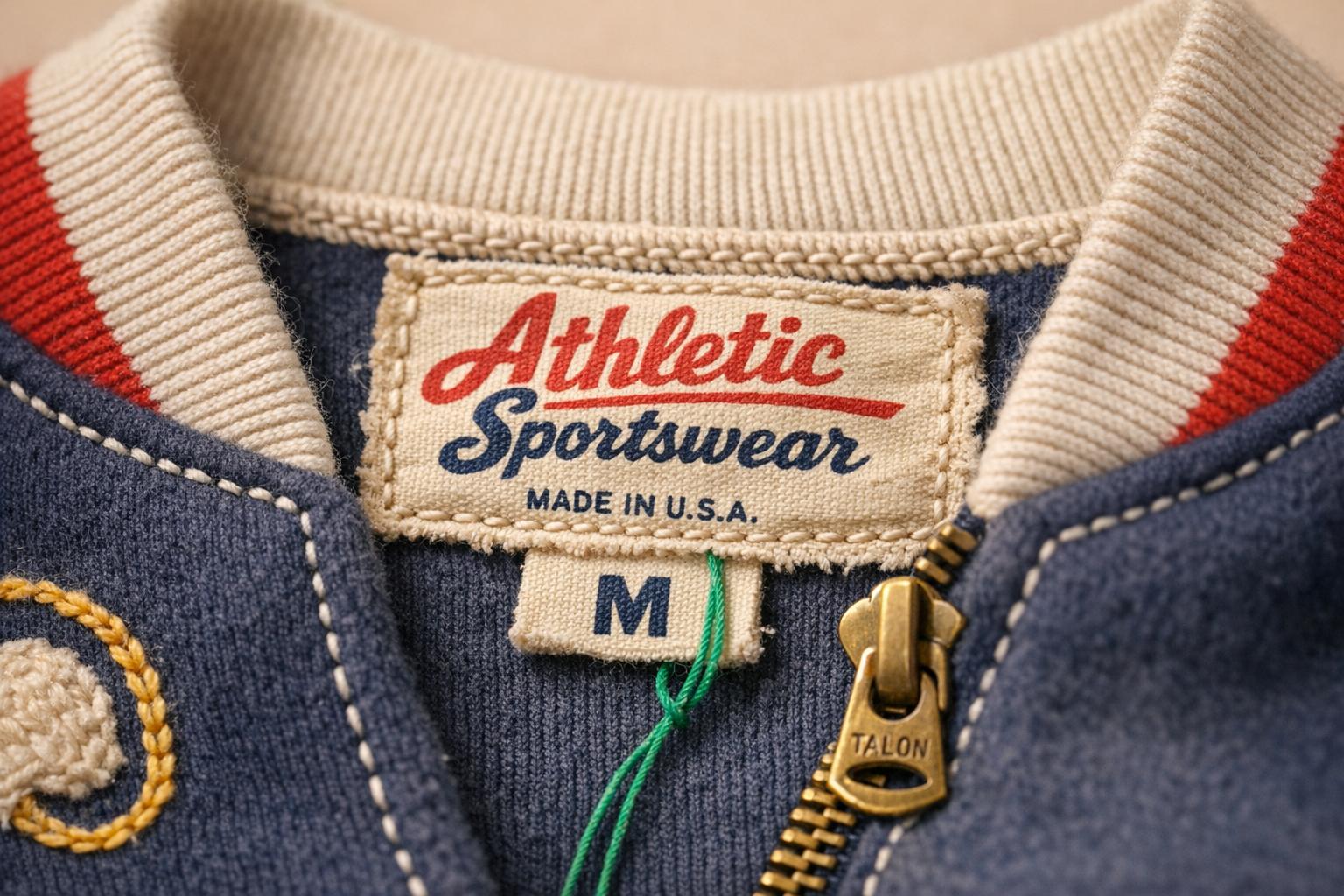
Vintage sportswear from the 1980s and 1990s has become a profitable niche in the Netherlands due to its limited availability, strong demand, and ties to iconic moments in sports and fashion. Collectors and resellers can achieve significant profit margins, but success depends on recognizing authentic pieces, understanding brand-specific details, and evaluating condition.
Key Steps to Spot High-Value Vintage Sportswear:
- Check Labels and Tags: Verify era-specific designs (e.g., Champion’s "Champion Products Inc." tags from the 1970s or Adidas' Trefoil logo used until 1991). Look for details like RN numbers or country of origin to confirm production periods.
- Inspect Stitching and Fabric: Single-stitch hems indicate pre-1996 pieces, while heavier fabrics and precise stitching signal older, higher-quality items.
- Identify Brand-Specific Features: Nike’s Blue Tag (1984–1988) or Adidas' Olympic collection tags from the 1980s are examples of rare, sought-after markers.
- Assess Condition: Minor wear may add character, but severe damage (e.g., broken zippers or peeling prints) lowers resale value. Deadstock items with original tags fetch the highest prices.
- Research Market Demand: Use platforms like eBay or Vinted to check sold listings and regional pricing trends and reselling strategies. For example, a Nike hoodie in Grade A condition sells for €30–€45 in the Netherlands.
Top-Selling Categories: Jerseys, track jackets, Starter pullovers, and complete tracksuits from the 1990s consistently perform well. Items tied to legendary teams or cultural moments (e.g., Chicago Bulls Starter jackets) command premium prices.
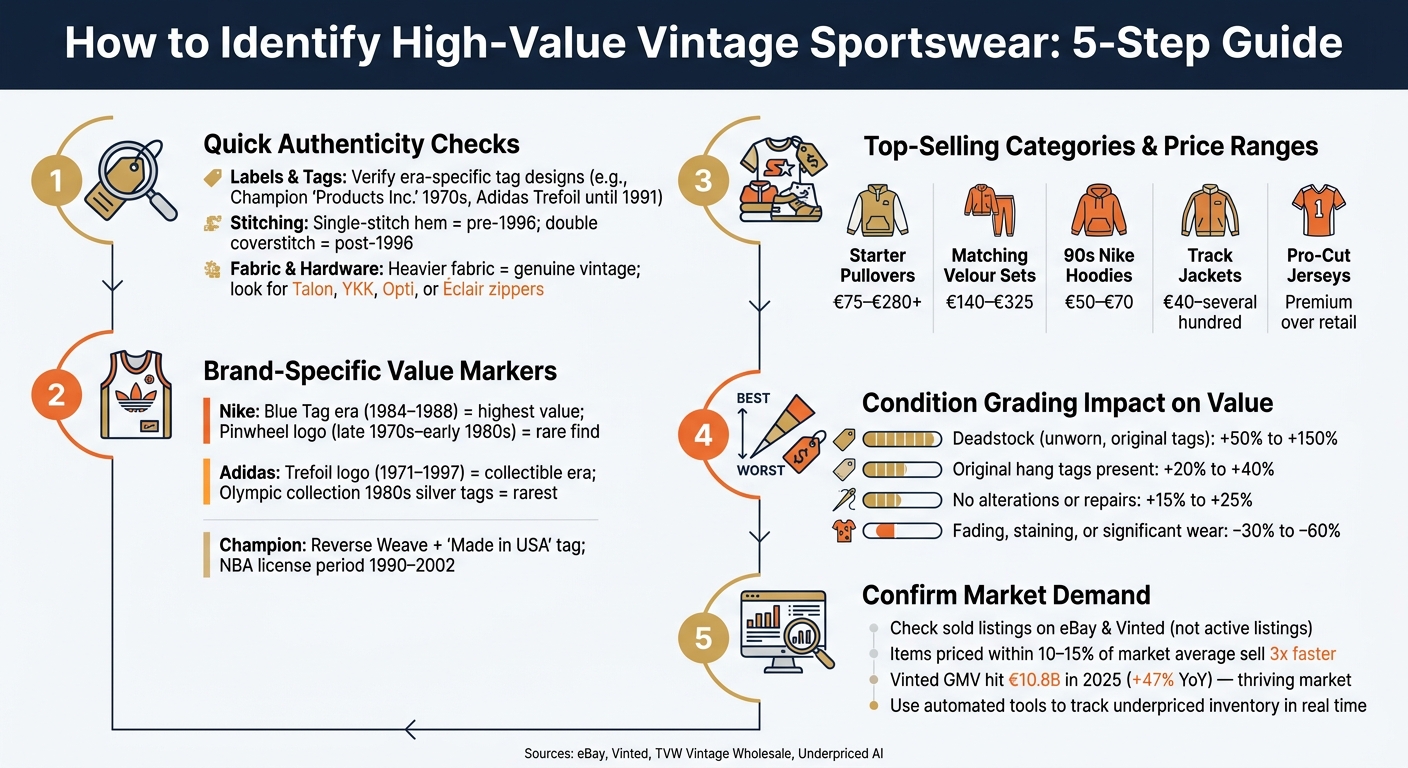
How to Identify High-Value Vintage Sportswear: 5-Step Authentication Guide
VINTAGE SPORTS TEAM TAG GUIDE
sbb-itb-d4aa959
Step 1: Quick Authenticity Checks
When it comes to identifying genuine vintage sportswear, a few quick checks can make all the difference. Start by verifying the garment’s authenticity. By focusing on three key areas - labels, stitching, and fabric - you can uncover most of the clues you need in just a few minutes.
Check Labels and Tags
Labels and tags are often your best starting point. Since manufacturers updated their tag designs over time, mismatched tags can quickly reveal an inauthentic piece. For instance, Champion used "Champion Products Inc." on its tags in the 1970s, switched to block text with a red and blue "C" in the 1980s, and incorporated RN numbers by the mid-1990s. Similarly, Adidas used its Trefoil logo exclusively from 1971 until the Mountain logo took over in 1991.
Care labels are another excellent tool for dating garments. In the U.S., permanently affixed care labels only became mandatory in 1972. So, if you see a printed care tag on something marketed as a 1960s piece, it’s likely a reproduction. Before the 1970s, washing instructions were typically text-only, rather than the symbol-based labels we’re familiar with today.
The country of origin also provides valuable insight. Authentic 1990s Champion jerseys were primarily made in the USA, Mexico, or Honduras. If a supposed pre-1990 item has a "Made in China" label, it’s a red flag.
"The body of the jersey can lie. The tag rarely does." - Keep It Classic
Once the tags check out, move on to the garment’s construction for further clues.
Check Stitching and Construction
Pay attention to the stitching, especially on the hems. Single-line stitching is one of the clearest markers of pre-1996 manufacturing. The double-stitch coverstitch, which became standard between 1996 and 1998, is a giveaway that a piece is from a later era. While single-stitching alone doesn’t confirm authenticity, double-stitching on a garment claimed to be from the early 1990s is a clear mismatch.
For jerseys, the inside of the garment tells a story. Authentic tackle-twill lettering - those layered fabric letters often seen on premium sportswear - should have a visible stitched outline on the reverse side. If the letters appear glued or have no interior stitching, the item is likely a replica or a lower-quality reproduction. Additionally, authentic-era stitching should be precise, with logos or numerals properly aligned. Reproductions often show slight misalignment, with designs off-centre by 1 to 3 mm.
Next, examine the fabric and hardware for further confirmation.
Check Fabric and Hardware
The feel of the fabric can be a dead giveaway. Genuine vintage sportswear tends to feel heavier than modern reproductions. Vintage crewnecks and jerseys, for example, have a more substantial weight compared to today’s "soft-style" blanks. Satin jackets, such as those from Starter in the early 1990s, should be made of 100% nylon. When you squeeze and release the fabric, authentic nylon satin springs back, while modern polyester satin tends to stay creased.
Hardware like zippers and snaps also provides critical clues. Look for vintage zippers from brands like Talon, YKK, Opti, Éclair, or Conmar. Metal zipper teeth typically indicate pre-1970s manufacturing, while plastic coil zippers became common in the 1960s. On Starter and Majestic jackets, check for heavy metal snap-front hardware, often engraved or branded. Lightweight, stamped metal snaps are a clear sign of modern reproductions.
Step 2: Spotting Brand-Specific Value Markers
Once you've confirmed an item is genuinely vintage, the next step is figuring out its collectible value. Not all vintage sportswear holds the same appeal. The trick lies in identifying the logos, tags, and design details that stand out for specific brands and time periods. This is what separates a great find from an average one. Let’s dive into key markers for top brands so you can focus on the pieces collectors crave. If you find a rare piece listed abroad, you can even shop from UK Vinted to secure it.
Nike: Early Swooshes and Retro Tags
Nike’s tag designs are a reliable way to date vintage pieces. The Blue Tag era (1984–1988) is a jackpot for resellers. These items feature a blue neck label with a silver-grey logo, are often made in the USA, and coincide with the launch of the Air Jordan line. Even earlier, Nike used the Pinwheel logo, a circle made of eight Swooshes, during the late 1970s and early 1980s. This design is a rare find and highly sought after.
"If authentic, [the pinwheel logo] indicates a very rare and highly valuable vintage piece." - TVW Vintage Wholesale
After the Blue Tag era, Nike introduced the Silver/Grey Tag (1987–1994), followed by the White/Black/Red tags (1994–1999). These later tags are notable for details like the "E" overlapping the Swoosh. Want to pinpoint a piece’s production even further? Look for a small label under the wash tag. It often includes a season code like "FA" (autumn) or "SP" (spring) followed by a two-digit year. For example, "FA02" would mean autumn 2002.
Adidas: Trefoil vs. Three Stripes
With Adidas, the logo tells the story. The Trefoil logo was used on all Adidas products from 1971 until 1997, when it became exclusive to the "Originals" line. If you come across a Trefoil logo on a piece clearly made before the mid-1990s, you’ve likely found something from Adidas' most collectible era. The Mountain logo, also known as the Performance logo, started replacing the Trefoil on performance lines in 1991.
Another key detail: Adidas tags from the 1980s often include a shiny silver strip and multi-country sizing codes. Items from the Adidas Olympic collection of the 1980s, which feature distinct silver tags, are considered some of the rarest vintage finds. Additionally, neck tags with product codes starting with "F1" are a good sign of authentic vintage from the 1980s or 1990s.
Champion and Other Archival Brands
For Champion, two features stand out: the Reverse Weave construction and the "Made in USA" tag. Reverse Weave items are made from heavyweight fleece with ribbed panels, and authentic pieces have an embroidered "C" patch on the left sleeve cuff with precise stitching. Jerseys produced during Champion's NBA on-court license period (1990–2002) are especially desirable.
Other brands also have their highlights. Starter satin jackets from the 1990s are in high demand among collectors. Similarly, Russell Athletic's "Diamond Collection" baseball jerseys from the late 1980s, known for their heavyweight fabric and stitched letters, are prized. For hockey enthusiasts, CCM jerseys with "Maska Air Knit" fabric are a must-watch. This material, a lofted polyester with a unique cell pattern, stands out because modern reissues can’t replicate it.
Step 3: Which Types of Vintage Sportswear Sell for the Most
Finding authentic vintage sportswear is only part of the equation - what truly drives resale value is demand and pricing. Certain categories of vintage sportswear consistently stand out, thanks to a mix of nostalgia, rarity, and their connection to iconic moments.
Jerseys, Track Jackets, and Teamwear
Jerseys are among the most reliable performers in the vintage sportswear market. The distinction between player-issued (pro-cut) jerseys and retail versions is key. Pro-cut jerseys are about 5–10 cm longer, made with heavier fabric, and include unique sub-tags, making them more collectible.
The team and era also play a massive role in value. Items tied to legendary franchises or memorable cultural moments often fetch higher prices. For example, gear from the 1990s expansion era - like Charlotte Hornets and San Jose Sharks apparel with their bold, unique colour schemes - remains highly sought after. A Charlotte Hornets Starter pullover could sell for €95–€280+ depending on its size and condition. Similarly, Chicago Bulls Starter pullovers typically fall in the €75–€235 range.
"The half-zip pullover - also called the anorak or breakaway jacket - is the most iconic Starter silhouette... it commands the highest prices across the board." - Underpriced AI
For track jackets, look for standout pieces like the Adidas Seefeld from the 1970s, Adidas ATP from the 1980s, or Fila Settanta jackets from the same period. Details such as woven logos and era-specific zippers (YKK or Opti) are strong indicators of authenticity.
Beyond jerseys, other pieces like sweatshirts and hoodies also hold considerable resale value.
Sweatshirts and Hoodies
Hoodies and sweatshirts can command surprisingly high prices, especially if they feature embroidered logos or "spell-out" graphics instead of screen prints. Rare Nike hoodies from the 1990s with embroidered branding often sell for €50–€70. A single-stitch hem is another telltale sign of pre-1996 manufacturing.
Size matters too. Larger sizes like L and XL are particularly desirable due to the ongoing oversized streetwear trend. A rare hoodie in a sought-after size can sell for significantly more than the same piece in a smaller cut.
In addition, shell tops and warm-up suits are another niche with strong resale potential.
Shell Tops and Warm-Up Suits
Shell tops and matching warm-up suits from the 1990s are highly collectible. These garments often feature neon accents, bold geometric colour-blocking, and oversized logos, all of which add to their appeal. Authenticity is key here - original 1990s nylon fabric has a distinct weight and texture that modern replicas can't match.
Complete sets are especially valuable. For example, a Juicy Couture velour tracksuit (jacket and trousers together) can sell for €140–€325. Selling the pieces separately typically results in lower earnings. The "McBling" aesthetic - characterized by rhinestone logos, flashy branding, and early 2000s vibes - drives this demand. Hot pink velour sets, in particular, can command a 25–40% premium over other colours.
| Category | Key Value Markers | Approximate Price Range |
|---|---|---|
| Pro-Cut Jerseys | Heavier fabric, longer cut, manufacturer sub-tags | Higher than retail equivalents |
| Starter Pullovers | Half-zip anorak style, dense embroidery, iconic teams | €75–€280+ |
| 90s Nike Hoodies | Embroidered logos, single-stitch hem, "Made in USA" tag | €50–€70 |
| Matching Velour Sets | Complete jacket + trousers, rhinestone logos, hot pink | €140–€325 |
| Track Jackets | Woven logos, YKK/Opti zips, 1970s–1980s silhouettes | €40–several hundred |
Step 4: Grading Condition and Its Effect on Price
After verifying authenticity, the next critical factor in determining resale value is the condition of the item. This can either elevate or lower the resale value by a staggering 50–150%. Mastering the art of assessing condition is a skill every reseller should aim to develop. It ties directly to identifying key value indicators from earlier steps, ensuring that only the most desirable pieces fetch top-dollar prices.
How to Spot Wear and Damage
Pay special attention to areas that typically show wear - like shoulders, elbows, cuffs, and the lower back. Uniform fading is a good indicator of genuine age, but severe issues such as holes, major tears, or fabric delamination can make a piece nearly unsellable.
When it comes to printed graphics, the type of cracking can tell you a lot. Authentic plastisol prints from the 1980s and 1990s tend to develop a spiderweb-like, irregular cracking pattern over time. On the other hand, if the cracking looks too uniform or stripe-like, you’re likely dealing with a modern reproduction. Also, be cautious of persistent odours - smoke, mildew, or sweat smells can significantly reduce a garment’s appeal.
"Minor imperfections are not flaws to be apologised for. They are evidence of authenticity. A small repair in period-correct thread, a faded logo from years of washing, a zip pull worn smooth by use: these details tell you the jacket is real." - My Vintage
Check Hardware and Components
Inspect zippers, snaps, and linings thoroughly. Vintage zippers from brands like YKK, Talon, Opti, Éclair, or Lightning (common from the 1960s through the 1990s) are a hallmark of authenticity. Genuine pull tabs from these eras feel heavy and have a dull finish, while modern replicas are often hollow and shiny.
Test every closure - open and close zippers fully, press each snap, and ensure Velcro tabs still grip. A broken zipper or a failed snap can be a dealbreaker, drastically reducing the item’s usability and value. Additionally, examine the lining material. Pre-1970s garments often used rayon or acetate linings, whereas polyester mesh linings tend to indicate a newer item or a reproduction.
When Flaws Do Not Kill the Value
In some cases, rarity can outweigh cosmetic imperfections. For example, a 1970s Adidas ATP track jacket or an original Fila Settanta piece with a faded stripe or worn collar can still attract serious collectors. Historical significance and scarcity often trump minor flaws. Rare, authenticated originals can sell for three to five times the price of modern reproductions, even with visible wear.
The key is distinguishing between normal ageing and red flags. Softened fabric or a slightly worn zipper is expected, but broken zipper teeth, peeling coatings, or separated seams are not. Always calculate whether the cost of professional restoration, combined with the purchase price, exceeds the value by using a Vinted fee calculator of a better-condition alternative - it’s often not worth the investment.
| Condition Factor | Impact on Resale Value |
|---|---|
| Deadstock (unworn, original tags) | +50% to +150% |
| Original hang tags present | +20% to +40% |
| No alterations or repairs | +15% to +25% |
| Fading, staining, or significant wear | −30% to −60% |
Step 5: Confirming Market Demand and Price
Once you've verified authenticity and condition, the next step is to ensure that the market demand aligns with your pricing expectations. Even the rarest item is only worth what someone is willing to pay for it right now.
Research Sold Listings
The best way to understand an item's current value is by examining what similar pieces have already sold for, rather than focusing on what sellers are asking. Active listings only reflect expectations, while sold listings reveal actual buyer behavior.
Platforms like eBay and Vinted allow you to filter for completed transactions. For example, searching for a specific item like "Nike track jacket XL" and sorting by recent sales provides a snapshot of the current market. Vinted's gross merchandise value hit €10.8 billion in 2025, marking a 47% year-over-year increase. This growth indicates a thriving market, but pricing remains crucial. Items priced within 10–15% of the recent market average sell three times faster than those priced outside this range.
"Active listings tell you what sellers are asking. They tell you nothing about what buyers are actually paying." - Vinta.App
Keep in mind that prices can vary across Europe. Adjust your research to reflect regional differences, as these insights are key to identifying what features drive collector interest.
Spot the Traits That Drive Collector Interest
Vintage items attract buyers for various reasons, but certain features can significantly boost their value. Collector-grade pieces often have unique characteristics that set them apart. For example, jerseys with tackle twill construction - where two layers of twill are stitched together with a zig-zag pattern - signal premium quality. In contrast, single-layer twill or screen-printed numbers usually indicate lower-tier replicas. Similarly, pro-cut features, such as longer body cuts, are highly sought after by serious collectors and command higher prices. These details were covered in earlier authentication steps.
In terms of style, demand is particularly high for 1990s and early 2000s (Y2K) pieces, such as embroidered Nike hoodies and vintage Dunks. A combination of scarcity, cultural relevance, and condition determines whether an item appeals to casual buyers or dedicated collectors willing to pay a premium.
Use Tools to Track Market Trends
Manual research can be time-consuming, but automated tools like VintiePlus make it easier to stay ahead. VintiePlus scans marketplaces around the clock, flagging underpriced vintage sportswear in real time. It even offers instant auto-buying for high-potential finds. With customizable filters, you can focus on specific brands, sizes, and price ranges, ensuring you're only alerted to items that meet your exact criteria. For resellers looking to scale, profit analytics turn market research into a streamlined, automated process.
Conclusion: What to Remember When Sourcing Vintage Sportswear
Spotting high-value vintage sportswear comes down to a few repeatable steps. Pay close attention to labels, stitching, and hardware to confirm authenticity. Look for details like single-stitch hems, original hardware (such as Talon or YKK zippers), and fabrics that match the era. These small but crucial elements help you distinguish genuine vintage pieces from modern reproductions.
Brand-specific knowledge is also a game-changer. For instance, Nike's tag colors transitioned from orange in the 1970s to blue in the 1980s and then to grey/red in the 1990s. Adidas introduced the Trefoil logo in 1971 and switched to the Mountain logo in 1991. Knowing these timelines allows you to date items quickly, without relying solely on the seller's description.
Condition plays a huge role in determining an item's value. For example, a Grade A Nike hoodie might sell for €30–€45 on Vinted NL, but visible wear or damage can significantly lower its resale price. While collectors might overlook minor flaws on rare pieces, overall condition often determines how quickly an item will sell and at what price.
To ensure fair pricing, check sold listings and Vinted tips regularly and stay aware of seasonal trends. Windbreakers, for example, tend to sell faster in spring and autumn, while heavier sweatshirts see higher demand during fall and early winter. Tools like VintiePlus can simplify this process by automatically tracking market trends and flagging underpriced inventory in real time. By incorporating these tools into your strategy, you can save time and focus on sourcing the best pieces.