
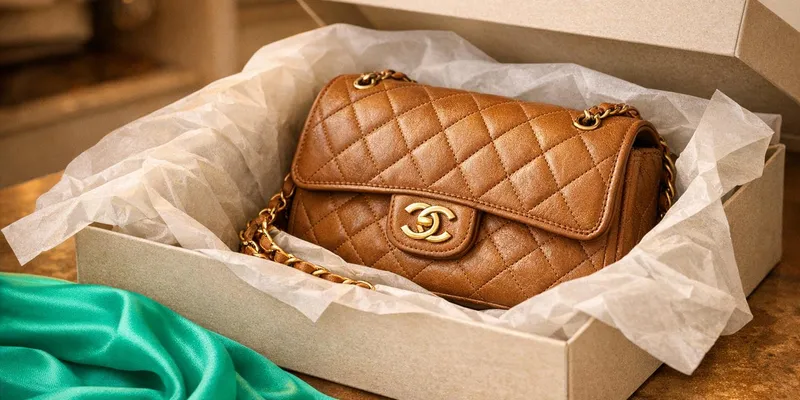
Preserving vintage fashion requires careful storage, cleaning, and maintenance to protect these delicate pieces and maintain their value. Whether you're safeguarding a Chanel handbag or a silk gown, following proper techniques ensures longevity and prevents irreversible damage. For more professional advice, explore our reselling blog and tips. Here's what you need to know:
- Inspection: Check for stains, fading, pests, and damage. Use acid-free paper for condition logs.
- Cleaning: Use fabric-appropriate cleaners (e.g., wool-safe detergents, vinegar for silk) and avoid harsh chemicals like bleach. For delicate items, consult professionals.
- Storage: Use acid-free tissue, breathable garment bags, and padded hangers. Maintain consistent temperature (18°C–23°C) and humidity (40%–55%). Avoid overcrowding.
- Maintenance: Inspect every 6–12 months for pests, mold, or creases. Rotate items to prevent wear.
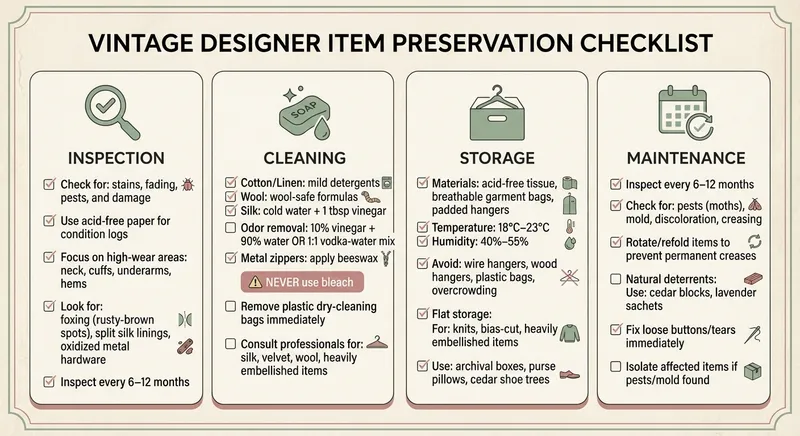
Complete Checklist for Preserving Vintage Designer Items
Best Ways to Protect Vintage Clothes: Doris & FIDM Museum Curator Kevin Jones on Conservation
Inspecting Items for Damage
Before storing or using a vintage designer piece, take the time to inspect it thoroughly. As the Smithsonian Museum Conservation Institute emphasizes:
Always presume that the textile is unique, irreplaceable, and fragile.
Set up your inspection area on a clean, flat surface about 91 cm high with strong lighting. Wash your hands with soap (skip the lotion to reduce dust) and remove any jewellery, watches, or loose clothing that might snag delicate fabrics.
Common Issues to Look For
Pay extra attention to high-wear areas like the neck, cuffs, underarms, and hems - these spots are most vulnerable to perspiration stains and abrasion. Keep an eye out for foxing, which appears as small, rusty-brown spots caused by fungi or poor storage conditions. If the garment has silk linings, check for splits, a common issue in pieces from 1890–1915 due to the tin salts used to weight the fabric.
Examine metal hardware like hooks, buttons, and zippers for signs of oxidation, rust, or tarnish, as these can leave permanent stains. If you encounter a stuck zipper, a bit of beeswax can help it glide smoothly again. Look for "rabbit ear" effects on shoulders, which indicate damage from wire hangers.
Compare exposed areas of the fabric to hidden spots, such as under collars or inside seams, to spot fading. The Institute of Conservation warns:
The fading of dyes is irreversible and may also be an indication of damage to the textile fibres.
Inspect natural fibres like wool and cashmere for tiny holes or grazed areas, which can signal pest infestations. Be alert for musky smells, smoke, or perfume, as these not only attract pests but also suggest poor storage conditions in the past.
Recording Item Condition
Use pencils and acid-free paper to create a detailed condition log - never pens or markers, as they might bleed onto the fabric. When documenting, use professional terms like foxing, shattering, oxidation, or bias-cut stretching to describe any issues. Pay special attention to high-wear areas and note any loose components.
Store any loose beads, trimmings, or buttons in small bags wrapped in acid-free tissue. Label these bags and keep them with the item for easy reference. Make it a habit to inspect stored vintage pieces every six to twelve months. This helps you catch early signs of mould, yellowing, or pest activity. If you spot an infestation, isolate the affected item immediately.
Next, discover the best practices for cleaning and maintaining these delicate treasures.
Cleaning Garments and Accessories Safely
After a careful inspection, cleaning your vintage garments and accessories requires a gentle touch to maintain their condition. Using the wrong techniques or products can harm delicate fabrics, fade colours, or damage embellishments. Here's how to choose the right cleaning methods and products for various materials.
Choosing the Right Cleaning Products
The cleaning product you use should match the fabric type. For cotton and linen, stick to mild detergents. Wool requires wool-safe formulas, while silk benefits from cold water mixed with a tablespoon of vinegar to help restore its natural shine.
For tackling stains, solid stain bars like Kind Laundry Vegan Stain Remover (€14) are a good choice. To neutralise odours, try misting a solution of 10% vinegar and 90% water or a 1:1 vodka-water mix. Experts often recommend the vodka-water mix to remove musty smells effectively.
If your garment has metal zippers - common in pieces made before 1965 - apply beeswax bars (€13) to keep them functioning smoothly. When steaming, always use distilled water to avoid mineral deposits. A reliable option is the Steamery Cirrus No.3 Steamer (€180). However, avoid steaming fabrics like silk, velvet, leather, suede, or garments with metallic embellishments directly. Instead, place a piece of muslin between the steamer and the fabric to minimise heat exposure.
Bleach should never be used on vintage items, and always test cleaning products on a hidden area first to check for adverse reactions. If your items come back from dry cleaning in plastic bags, remove them immediately to prevent yellowing.
Spot Cleaning vs. Professional Services
For minor stains, spot cleaning can often save a trip to the cleaners. Use a gentle remover for small stains, and for leather, a tiny amount of baby shampoo or mild soap works well. Wipe it clean with a damp cloth and let it air-dry naturally - never submerge leather in water.
However, professional cleaning is essential for fragile fabrics like silk, velvet, wool, or heavily embellished garments. Doug Greenberg, a fashion archivist at Garde Robe, advises:
Your average dry cleaner has no business handling expensive and delicate designer RTW or couture. The best dry cleaners clean many items by hand and use different solvents and machinery for different fabrics.
Before trusting a professional cleaner with your valuable pieces, ask detailed questions about their methods. Do they clean by hand? What solvents do they use? Do they outsource specialised treatments, such as leather cleaning? Reputable cleaners often remove buttons and embellishments before cleaning and reattach them afterward - this level of care explains their higher fees.
For couture pieces, heirlooms, or garments with issues like active metal corrosion, it’s best to consult a textile conservator rather than a standard cleaner. Finally, ensure all items are thoroughly cleaned and dried before storing them long-term, as body oils and perfumes can attract insects.
Storing Vintage Designer Items Properly
Once your vintage pieces are clean, the next step is proper storage to shield them from light, humidity, and physical stress. The materials you use and the way you organize these items play a key role in maintaining their condition and resale value. Start by selecting storage materials that prevent acid damage.
Using Acid-Free Storage Materials
Regular cardboard, wood, and standard tissue paper contain acids that can seep into fabric fibers, leading to yellowing, brittleness, and eventual decay. To protect your garments, opt for acid-free tissue paper. Use it to pad folds, stuff sleeves, and separate materials like leather, suede, or denim to avoid dye transfer. Rolling the tissue into tubes and placing them in folds can help fabrics maintain their shape.
Instead of standard cardboard boxes, store garments in archival storage boxes. These provide protection from light, dust, and harmful acids. For hanging items, breathable garment bags made from muslin, unbleached cotton, or polypropylene are ideal. Avoid plastic dry-cleaning bags, as they trap moisture and gases, which can lead to discoloration and mold.
Hollis Jenkins-Evans from Past Perfect Vintage emphasizes:
Never, ever use wire or wood hangers. Wire rusts, causes distortion and tears and doesn't support properly. Wood is acid and eats the textile.
Instead, use padded hangers that evenly distribute weight and prevent shoulder damage. For accessories, lightly stuff handbags with purse pillows or acid-free tissue to preserve their shape, and use cedar shoe trees to maintain leather footwear.
Temperature and Humidity Control
Consistent temperature and humidity levels are crucial for preserving textiles. Aim for a temperature range of 18°C–23°C and a relative humidity (RH) of 40%–55%. Use air conditioning and dehumidifiers to avoid fluctuations, and ensure air vents are directed away from stored items. High humidity can lead to mold and mildew, while low humidity can make fibers brittle.
Sarah Glenn, textile conservator and founder of Atelier Nine, explains:
High heat on the other hand will embrittle textiles; high humidity will promote biological activity; and very dry conditions will lead to a crispness in the fabric that is detrimental.
Avoid storing items in attics, basements, or unheated spaces, as these areas are prone to temperature swings and moisture problems. Open wardrobe doors periodically and use fans to improve air circulation, which helps prevent the musty conditions that encourage mold growth.
If you find active mold on an item, isolate it immediately. Wrap it in polyethylene sheeting and place it in the freezer to halt growth before consulting a professional conservator. For moth infestations, seal items in airtight bags and freeze them for about two weeks to eliminate larvae.
Avoiding Overcrowding
Overcrowding can restrict airflow, cause permanent creasing, and damage seams, zippers, or embellishments. Proper spacing, combined with acid-free storage and climate control, helps preserve the structure of your garments. When using flat storage boxes, place heavier items at the bottom and limit stacks to no more than three items to prevent crushing.
Doug Greenberg, storage and fashion archivist at Garde Robe, advises:
Never hang stretchable fabrics such as knits, bias cut, and heavily-embellished, heavy garments because they could get distorted. Store these items flat in a breathable garment box or folded with acid-free tissue to avoid creasing.
For hanging garments, ensure there’s enough space between items to prevent them from pressing against one another. Use acid-free tissue between folded items in boxes to stop embellishments from snagging other fabrics. Label storage boxes with detailed contents lists to minimize handling and reduce the risk of damage. Regularly inspect and refold items to prevent permanent creases. Lastly, always store worn and clean garments separately to avoid attracting pests.
sbb-itb-d4aa959
Performing Regular Maintenance Checks
Taking the time to inspect vintage pieces every six months can make a world of difference. These routine checks not only help you catch minor issues early but also ensure your collection maintains its value in the resale market.
Checking for Environmental Damage
Start each inspection by scanning for signs of pest activity. Clothes moths (Tineola bisselliella) are especially drawn to body oils, perfumes, and even invisible food stains, often leaving behind holes or fabric damage. Pay close attention to seams, folds, and hidden areas where larvae might be lurking. If you spot any damage, isolate the affected items immediately. Natural deterrents, like cedar blocks or lavender sachets, can help keep pests at bay.
Next, examine fabrics for mould, mildew, or discolouration. Humidity levels above 40%–55% can encourage biological growth. Items stored near floors are particularly vulnerable, as moisture from flooring can seep into textiles. Look out for foxing - small brown stains that indicate improper storage conditions. If your pieces have a musty "vintage smell", a light spray of a 1:1 vodka-and-water mix can help neutralise odours.
Light damage is another stealthy culprit. Fading can be tricky to detect, so compare exposed areas of the fabric with those hidden in folds or seams. To prevent permanent creasing and uneven wear, rotate or refold delicate items during your check. The Victoria and Albert Museum even suggests unpacking and repacking your collection annually to avoid long-term creases.
Once you've addressed any environmental risks, it's time to reassess the market value of your items.
Reassessing Market Value
After ensuring your pieces are in good shape, take a closer look at their market potential. Use these maintenance checks to evaluate resale value by comparing each item's condition with current market trends on platforms like Vinted or eBay. Small issues like loose buttons or tiny tears can escalate quickly, so tackle repairs immediately to maintain both structural integrity and market appeal.
For serious resellers, tools like VintiePlus can provide round-the-clock market insights. Starting at €29,95 per month, the platform offers basic analytics and up to 10 custom filters, boasting a 98% success rate for flipping underpriced designer items. During your inspection, double-check for intact labels and unique features like metal zippers, which can signal pre-1965 manufacture. These details are crucial for authenticating and appraising high-value pieces.
| Maintenance Issue | Impact on Market Value | Recommended Action |
|---|---|---|
| Foxing/Brown Stains | Significant drop; suggests poor storage | Consult a textile conservator for targeted treatment |
| Loose Buttons/Tears | Minor to moderate drop | Fix immediately to avoid further damage |
| Permanent Creasing | Moderate drop; affects presentation | Unpack and repack every 6–12 months |
| Moth/Pest Damage | Severe drop; can ruin item entirely | Use cedar or lavender; inspect regularly |
Using Automation Tools for Reselling
When it comes to reselling well-preserved vintage items, efficiency is key. The days of manually monitoring marketplaces are behind us - automation has taken the lead. For serious resellers, automation isn't just a handy tool; it's a necessity to stay competitive in the fast-moving vintage market.
Leveraging VintiePlus for Market Monitoring

VintiePlus is a game-changer for resellers, offering round-the-clock automated scanning across EU marketplaces. It quickly flags underpriced items, and its auto-buy feature ensures you can secure those treasures instantly - a huge advantage when vying for valuable vintage pieces. Pricing starts at €29,95 per month, with plans that scale based on your filtering needs and desired purchasing speed.
By setting filters, you can focus on sourcing archival pieces that carry historical significance, whether to a brand or the broader industry. Understanding market trends and fair value through sales data helps you refine your strategy. This real-time data isn't just about finding deals; it also feeds into performance tracking, helping you stay ahead.
Simplifying Profit Tracking with Analytics
Once you've mastered market monitoring, the next step is streamlining your profit tracking. VintiePlus offers an analytics dashboard that centralises all your key data - inventory levels, purchase dates, costs, and profit margins - into one system. Forget about juggling spreadsheets; digital tracking makes scaling your operations much smoother.
The platform's performance insights reveal which designer labels, item categories, or price ranges deliver the best returns. This allows you to fine-tune your sourcing strategy over time. Additionally, recording key details about your items enhances provenance, boosting their resale value. These analytics provide a clear window into the market's potential, helping you make smarter, data-driven decisions.
Conclusion
Caring for vintage designer items isn’t just about sentimental value - it’s about protecting a worthwhile investment. To keep these treasures in pristine condition, use acid-free tissue paper, breathable garment bags, and ensure they’re stored in environments free from harmful light, excess moisture, and pests. Doug Greenberg from Garde Robe offers an essential tip:
Never hang stretchable fabrics such as knits, bias cut, and heavily-embellished, heavy garments because they could get distorted. Store these items flat.
A proactive approach to maintenance is key. Addressing small issues like loose buttons or minor tears early ensures they don’t escalate into bigger problems that can diminish the value of your items. After all, condition is the most critical factor when it comes to resale potential, and even minor damage can have a big impact.
Preservation doesn’t just protect your collection - it enhances its market appeal. Buyers are often willing to pay a premium for items that are well-cared for and come with clear signs of authenticity.
Pairing meticulous preservation techniques with smart business tools like VintiePlus can give you a competitive edge. This platform helps monitor market trends, track profits, and identify opportunities for high-margin sales. By combining proper care with data-driven strategies, you can maximise the value of each piece and build a thriving, sustainable business.